


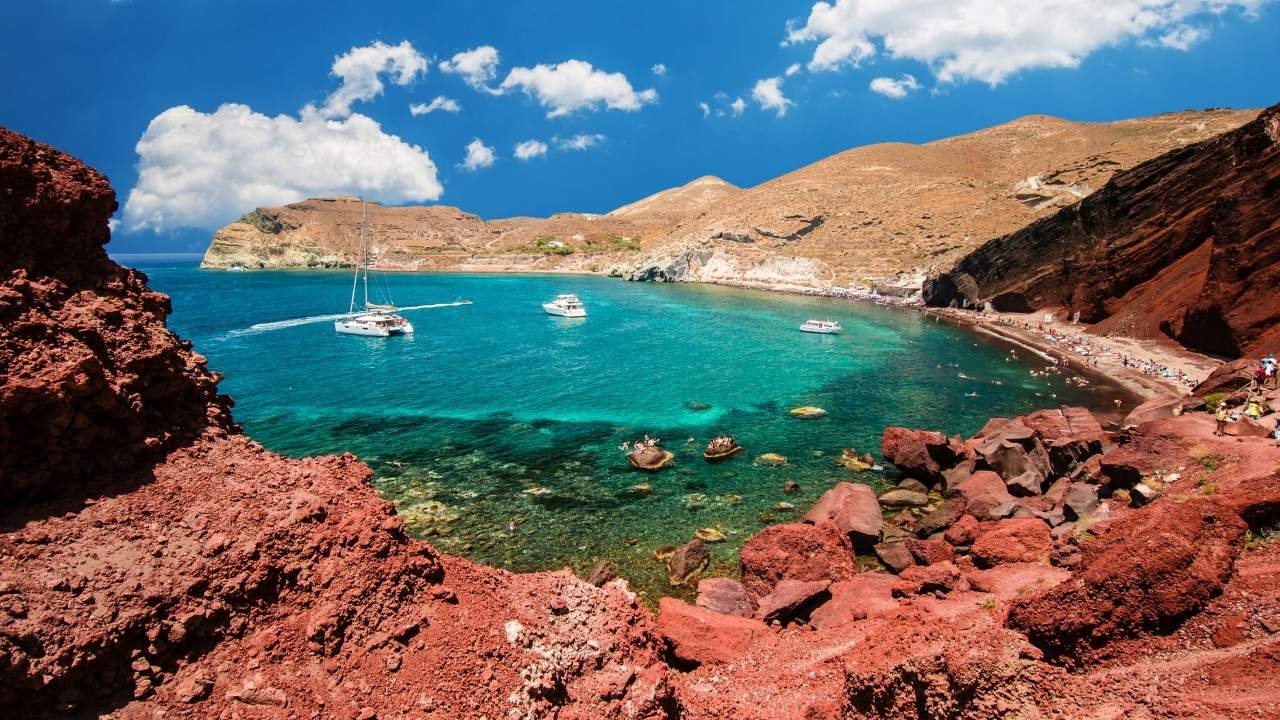
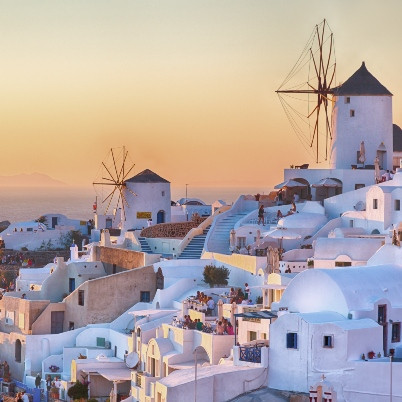
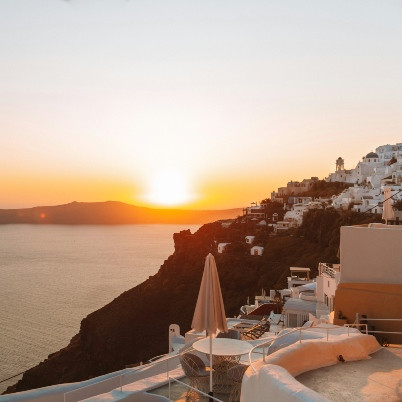
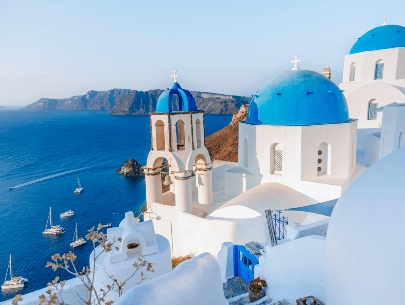
Santorini rises in sheer walls of lava-dark rock and light, with Oia and Fira poised high above the flooded caldera as though etched into its rim. You’ll trace marble lanes past cube-shaped houses washed in chalky lime, cobalt-domed chapels, and terraces where dinner stretches lazily as the late sun turns the volcanic basin to gold. Then the island shifts register. At Perissa, black pebbled shorelines absorb the heat, while Akrotiri’s iron-red cliffs show the violence that formed them. Here, terraces and cave suites sit above a crater flooded by the sea, while vineyards curl low through volcanic soil shaped by ash and wind. If you’re drawn to suites suspended over the caldera, Assyrtiko vines trained low against the wind, and nights that linger high above the Aegean, this island leaves its mark quickly and completely.
Step off the ferry and Greece gathers around you at once: thyme caught in the heat, salt drying on your skin, church bells carrying across the harbor while chairs scrape against stone in the square. If you’re deciding which islands are worth your time, the real pleasure lies in their differences. Discover the best Greek islands to visit through volcanic cliffs, wind-shaped vineyards, pine shade, Venetian facades, and taverna tables set with island cheese and fish brought in that morning. Some sharpen your sense of history through monasteries, ruins, and medieval lanes. Others pull you toward long swims, late dinners, and waterfront nights.
Cyclades
Santorini
Mykonos
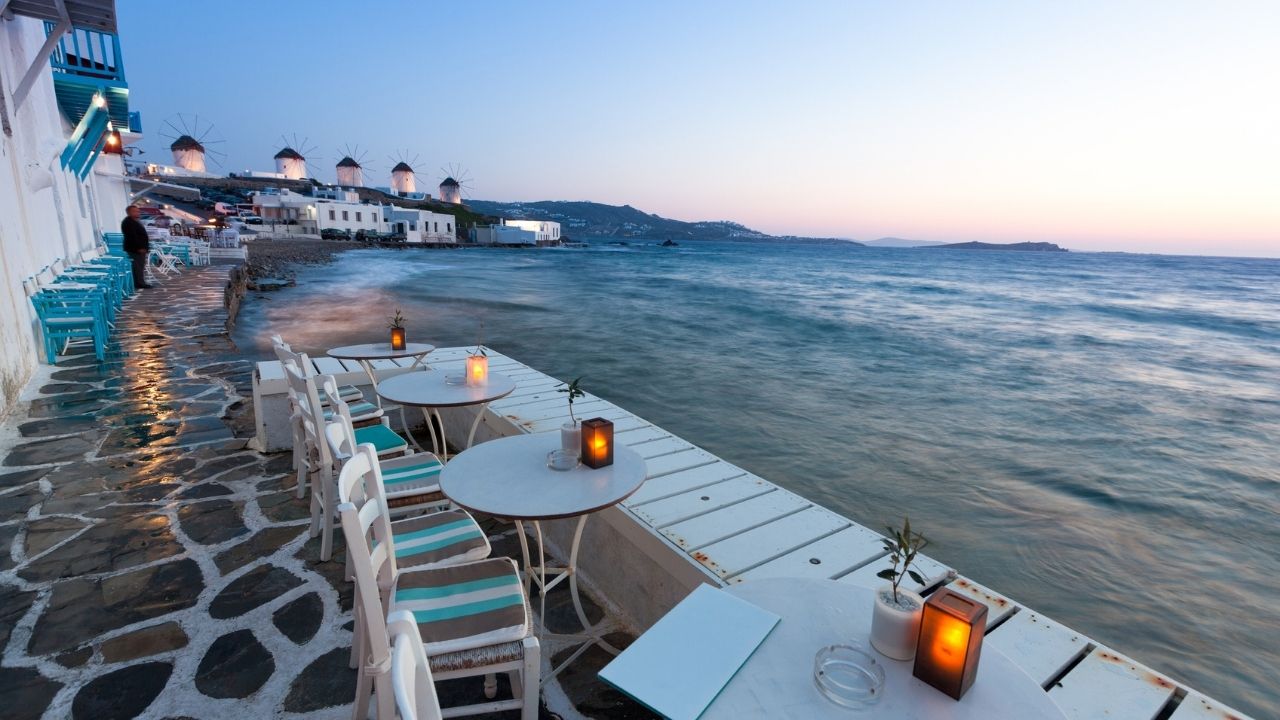
Mykonos flashes in lime-washed walls, cobalt shutters, and the slap of water against moored boats below the town. One moment, you’re stretched out above the clear water at Psarou, where the music is low, the staff move with easy precision, and lunch arrives with grilled prawns, lemon, and something cold in your glass. Next, you’re winding through Chora, where narrow lanes twist past cube-shaped houses, tiny churches, and fashion boutiques tucked behind painted doors. Then you reach Little Venice, where waves strike the buildings below your table and the whole waterfront hangs directly over the sea. Higher up, the windmills catch the light and remind you that Mykonos has always lived by movement. By dusk, the island softens into clinking glasses, lantern-lit terraces, and tables by the old port where dinner lingers well past midnight.
Naxos
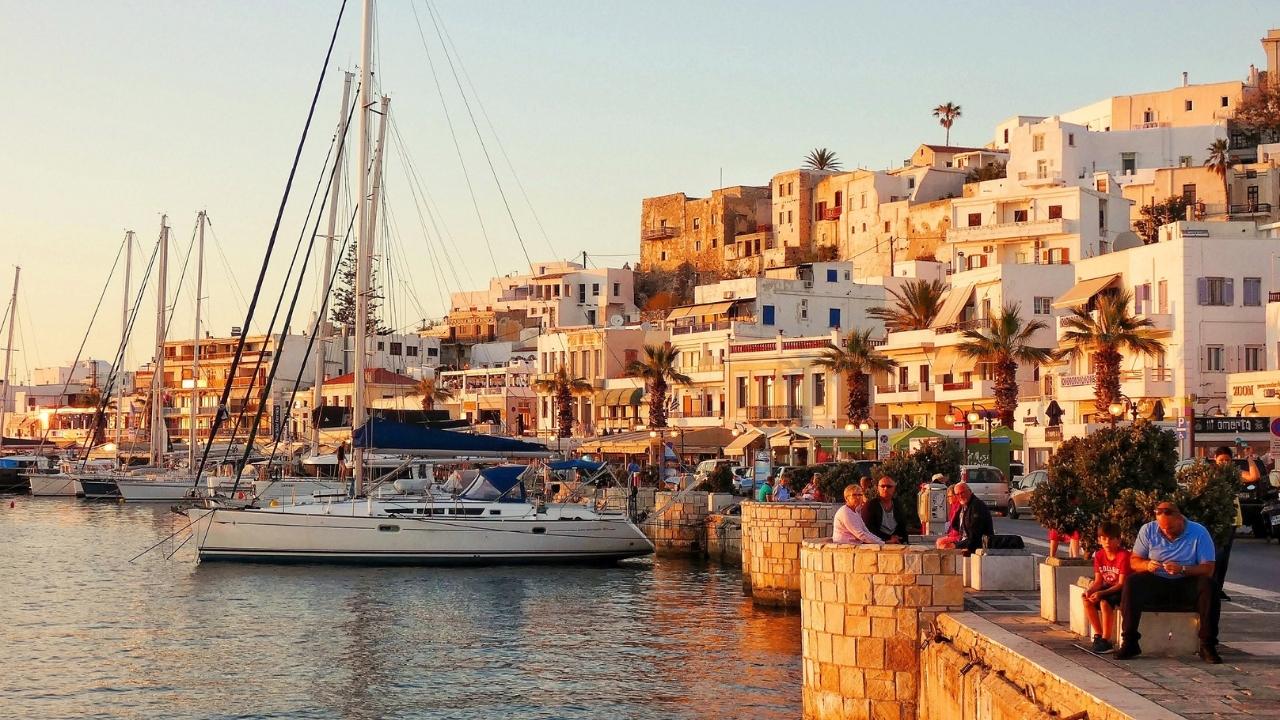
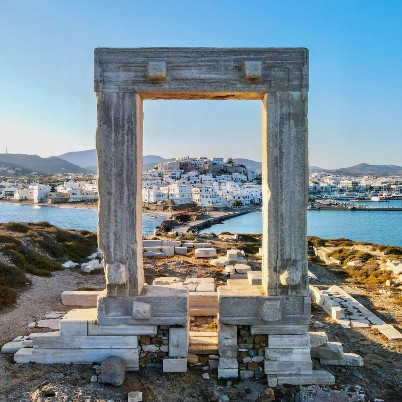
Naxos moves to the steady pulse of its own soil, where terraced hills, marble-built villages, and broad green valleys give the island a fullness you can see and taste. At the edge of Chora, the Portara rises in solitary stone above the water, its vast marble opening burning gold in the late sun as ferries drift in and out below. Elsewhere, Naxos comes into focus through the table: a glass of chilled kitron, nutty slabs of graviera, just-landed fish, and the island’s famously sweet potatoes, all shaped by fertile land and a farming tradition that still holds firm. Along the west coast, Plaka and Agios Prokopios unfurl in long bands of sand and shallow, lucid water, where the shoreline seems to glow well into the afternoon.
Milos
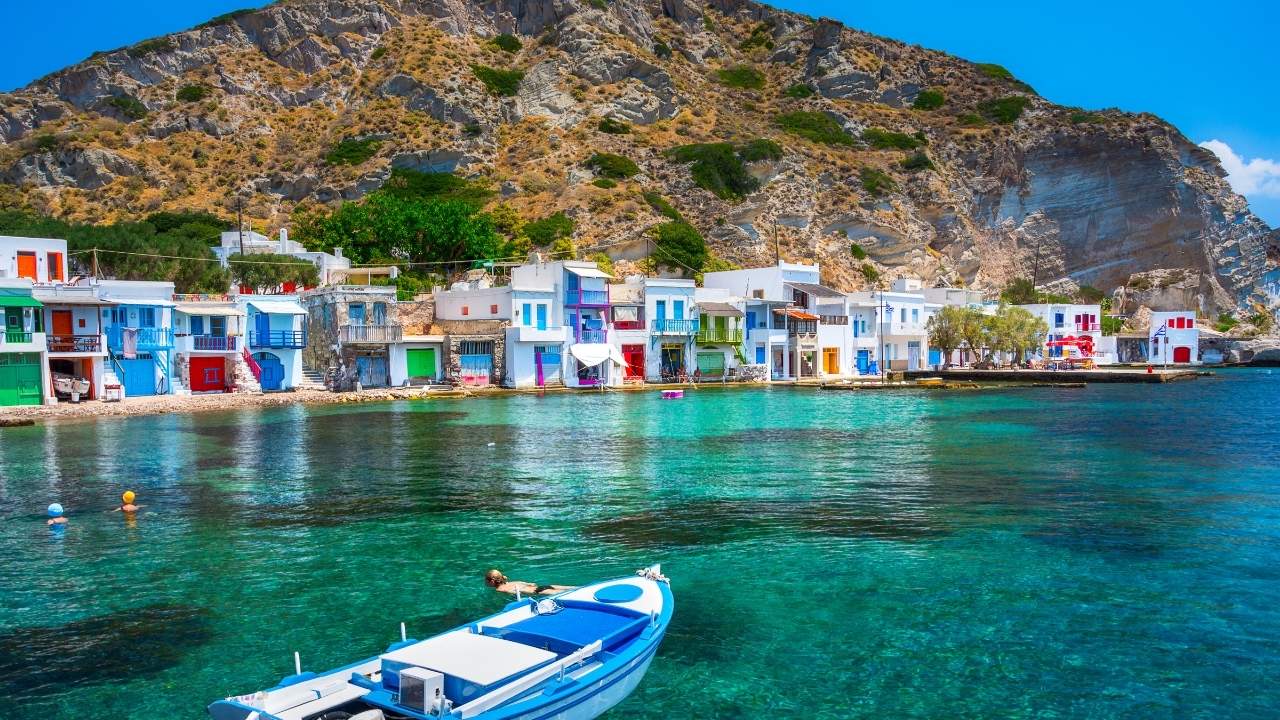
Milos shows its volcanic history in white tuff formations, sea caves, and coves cut into soft rock. At Sarakiniko, chalk-white stone ripples and hollows into a shoreline so stark and wind-carved it seems to glow against the blue. In Klima, the syrmata stand flush with the water, their painted doors in red, blue, and yellow reflecting a fishing tradition that still gives the village its texture and pulse. The island carries its past close, too, from the ancient catacombs cut into the earth to its enduring connection with the Venus de Milo, unearthed here in 1820. Across Milos, boat houses, fishing hamlets, and mineral-shaped inlets sit side by side, giving the island a landscape that feels both geologically dramatic and firmly lived in.
Paros & Antiparos
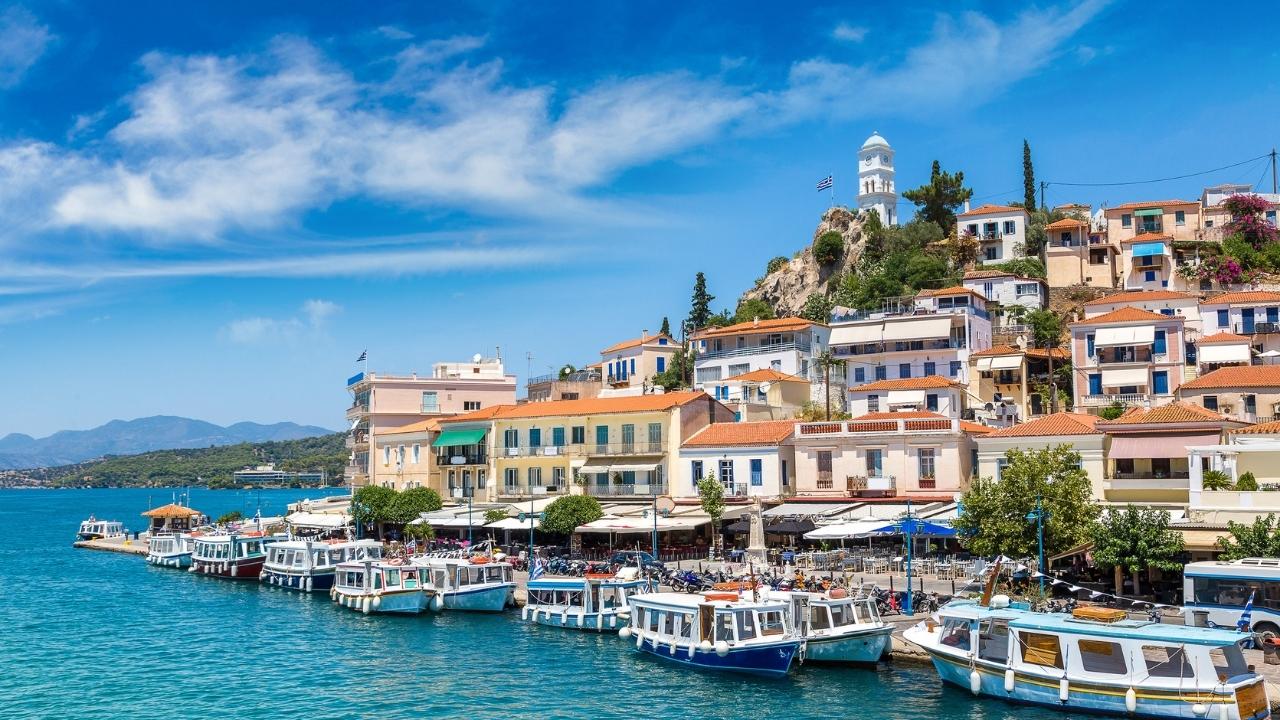
The shift between Paros and Antiparos begins the moment the boat leaves the dock, when the air tastes of brine and sun-warmed rope and one island’s pulse gives way to the other. In Naoussa, fishermen’s caiques rock against the harbor wall while taverna tables gather at the water’s edge, and the village draws you in through marble-paved alleys and courtyards bright with geraniums. You feel Paros in the low murmur from the waterfront and the hush that settles over Lefkes as the heat begins to lift. Then Antiparos changes the mood. The crossing is brief, but everything softens once you arrive: calm coves, pale footpaths, and a village where the streets stay quiet enough for the sound of your sandals against the stone. By the time you’ve moved between them, you don’t remember one island without feeling the pull of the other.
Amorgos
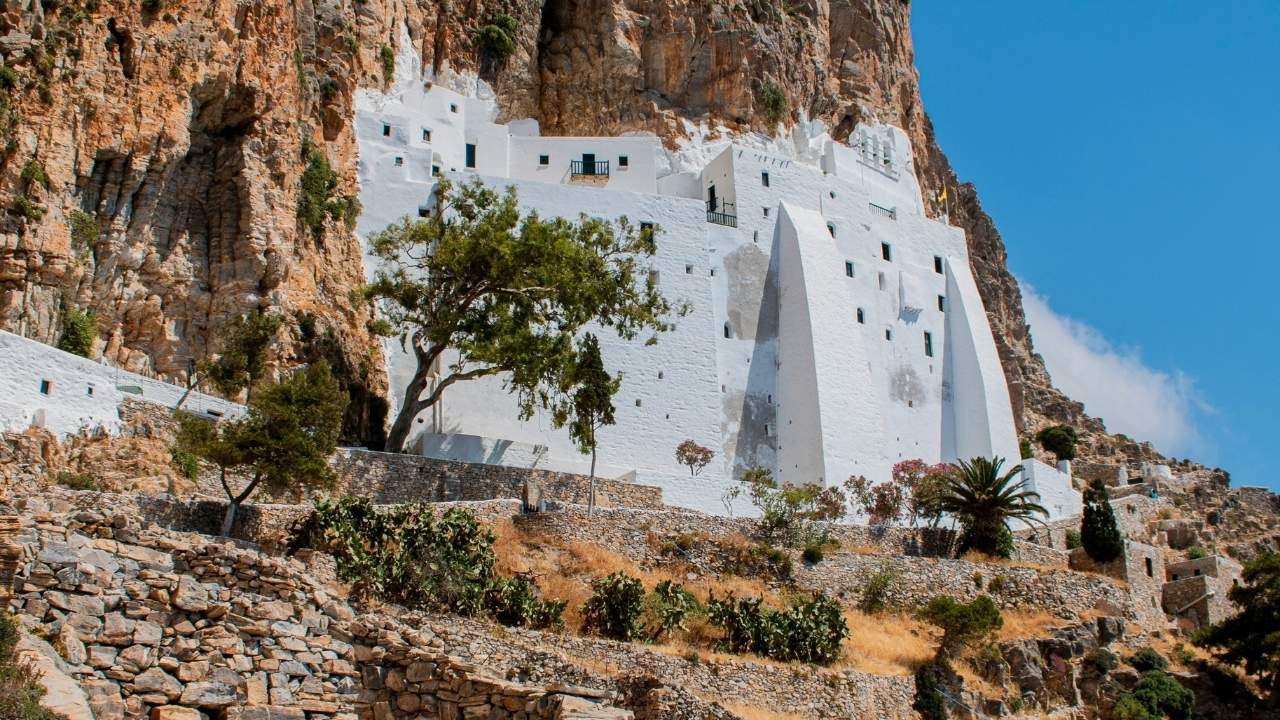
Amorgos rises in sheer lines and long silences, where mule paths cross steep slopes, wind sweeps the ridgelines, and the land drops abruptly into deep blue water. Nothing captures that tension more vividly than the Monastery of Panagia Hozoviotissa, a ribbon of pale stone fastened to the cliff face, so high above the Aegean it seems held there by faith and gravity alone. Below, Agia Anna flashes with clear water, dark rock shelves, and bright, hard light that keeps shifting across the stone as the day unfolds. Further inland, old footpaths lead you through terraces, pocket-sized chapels, and villages perched high above the sea, revealing an island shaped by devotion, labor, and altitude. Amorgos suits steep kalderimia, cube-built hill villages with blue shutters and narrow passages, and a terrain where monasteries, terraced fields, and raw stone outcrops still govern the shape of daily life.
Ios
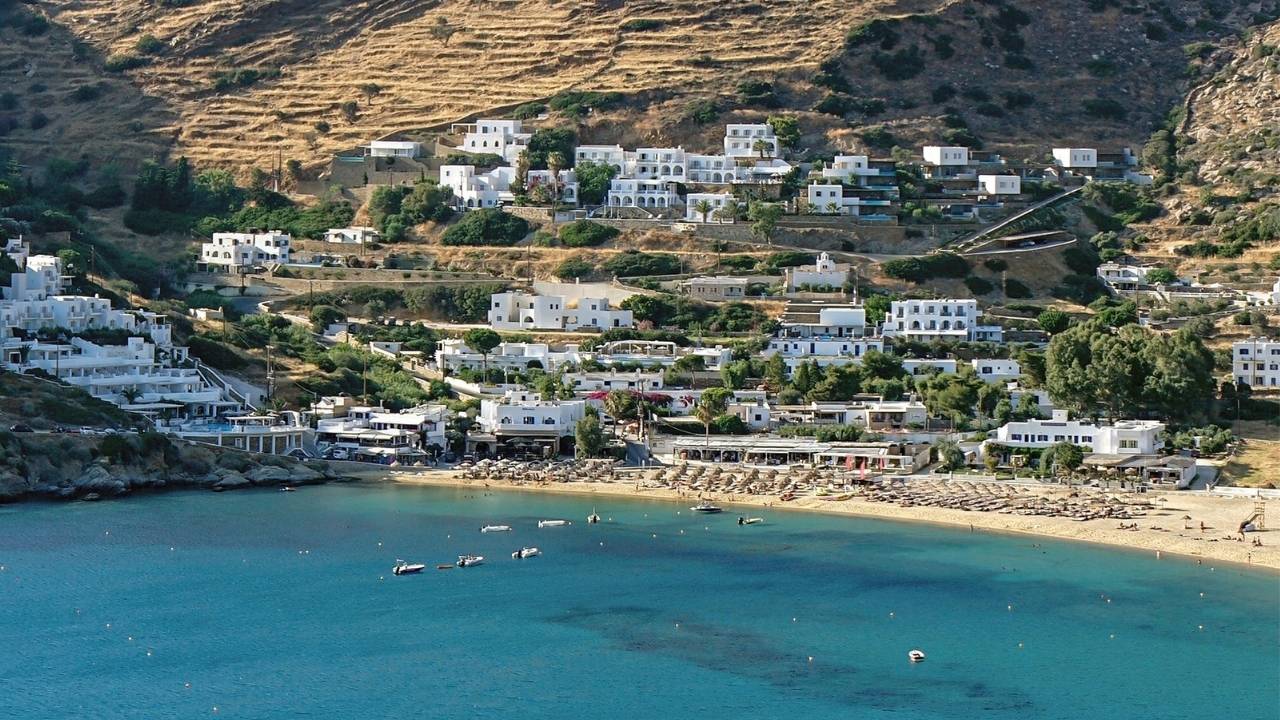
On Ios, your day might begin on the long arc of Mylopotas, where the water catches the light in shifting bands of cobalt and glass-green, and the bay stirs with paddleboards, swimmers, and the bass note of beach bars easing into the afternoon. By evening, the island pulls you uphill into Chora, where marble lanes twist between cube-shaped houses, bell-crowned chapels, and bars hidden behind plain wooden doors, with music and laughter drifting down the steps long after dark. Yet Ios is anchored in a much older history too. At Skarkos, just outside the port, excavated stone dwellings and terraced streets mark one of the Cyclades’ most significant prehistoric settlements, placing Bronze Age remains within easy reach of the harbor and giving the island a social life that still unfolds in close view of its earliest foundations.
Syros
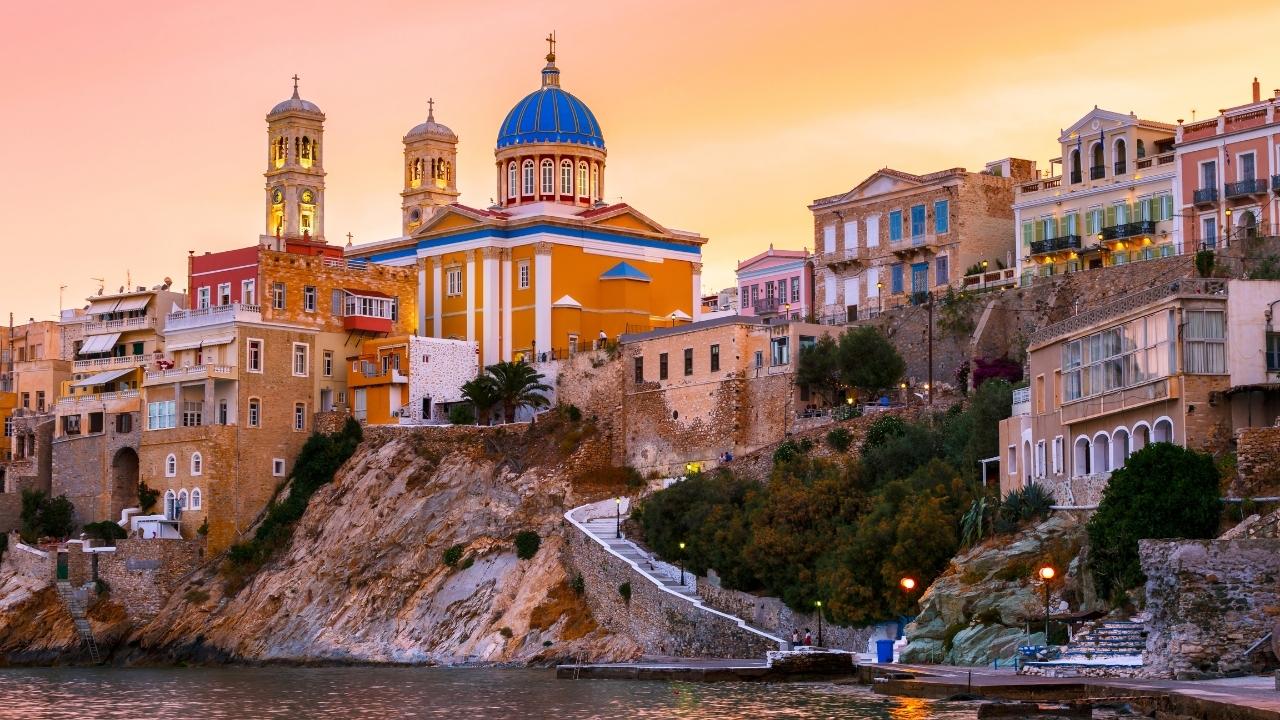
Syros comes into focus as you enter Ermoupoli, where broad stone stairways, ochre and blush-toned mansions, and carved doorways trace the legacy of a port city shaped by commerce, craft, and the sea. In Miaouli Square, palms throw shifting patterns across the paving while the Town Hall presides over the square with quiet authority, and inside the Apollo Theater, velvet seats and painted ceilings summon a time when the island turned as readily toward Europe as toward the Aegean. Along the shore, the mood shifts. In Kini, caiques nod beside the quay and grilled fish reaches your table within sight of the boats that hauled it in; in Galissas, the bay opens into sheltered, glass-clear water and sand still holding the sun’s heat at dusk. Syros brings together 19th-century merchant architecture, an active harbor, and easy beach afternoons in a way that feels unusually complete within the Cyclades.
Sifnos
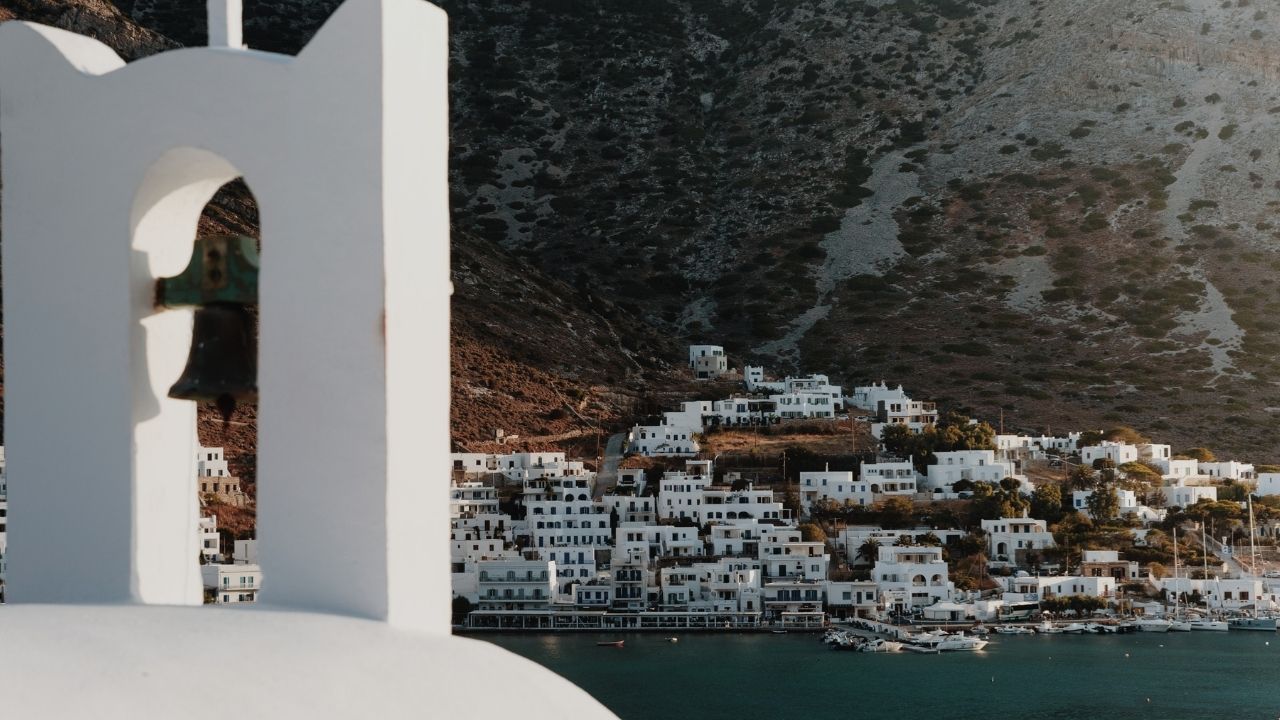
Sifnos comes alive through touch, scent, and sound: revithada slow-baking in clay, red dust lifting from a potter’s bench, sandals striking stone lanes between chapels and low walls still warm from the sun. In Kastro, the island’s medieval spine holds firm, with narrow passages, worn thresholds, and sudden flashes of Aegean blue between close-set houses. You feel Sifnos’ craftsmanship everywhere, in kiln-fired ceramics shaped from local earth and in a food tradition so deeply rooted it has carried the island’s name far beyond the Cyclades. Then the coast opens. Vathi settles into a sheltered bay where caiques rest in clear shallows, while Platis Gialos stretches wide for long swims and lunches by the water. On Sifnos, that sense of craft runs from the potteries and bakery ovens to the tavernas, where recipes, clay, and daily ritual remain closely tied to the island itself.
Ionian Islands
Corfu
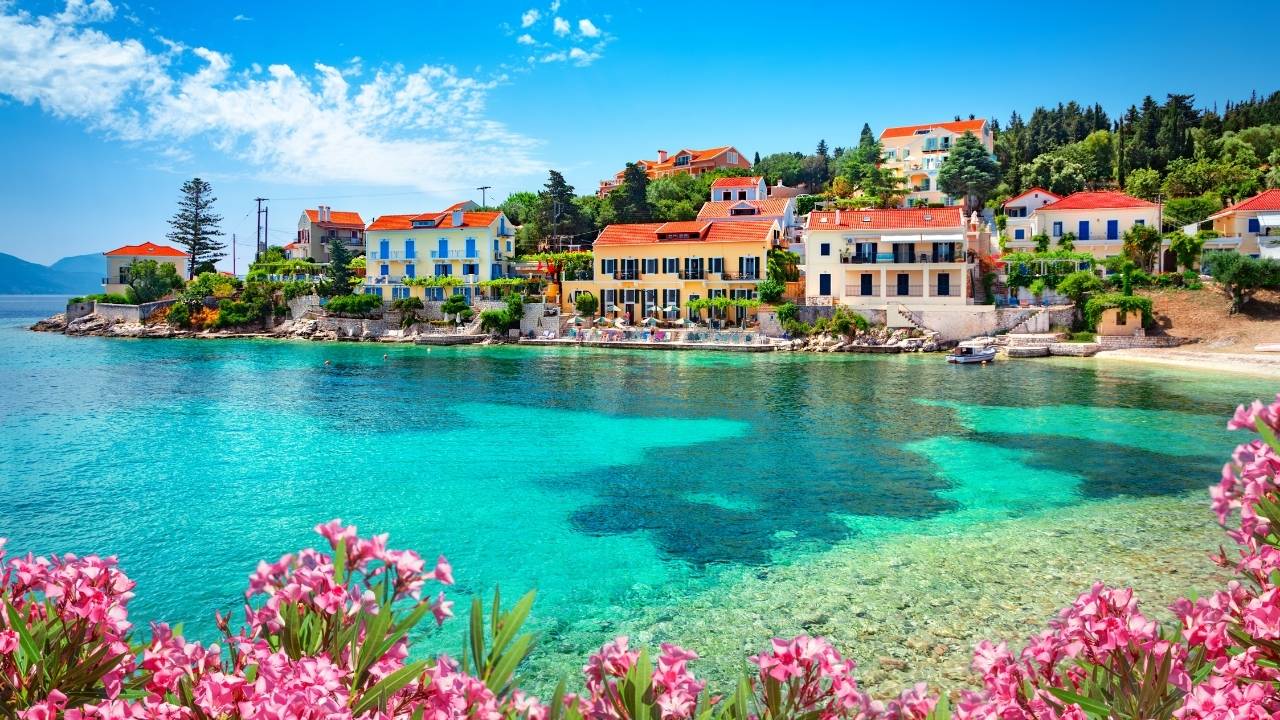
Corfu reaches you first through dappled olive light and the briny lift of the Ionian air: groves flickering silver in the wind, cypress standing in dark vertical lines against the hills, and sea salt threading its way into streets shaped by Venetian rule. In the Old Town, laundry sways above narrow kantounia, shuttered facades catch the light in weathered ochre, and the Liston’s arcades frame a square where conversation, coffee, and routine still set the rhythm. At the Achilleion, frescoed chambers, colonnades, and statue-lined gardens bring a more theatrical note, suspended above the coast. Then Paleokastritsa turns Corfu outward again, with pine-clad slopes dropping into inlets of glassy turquoise and deep blue, a monastery bell sounding from above, and cliffs reflected in water so still it seems enamelled. Corfu leaves a strong impression through its rare mix of Venetian elegance, lush Ionian abundance, and a town-and-country life still fully inhabited.
Zakynthos
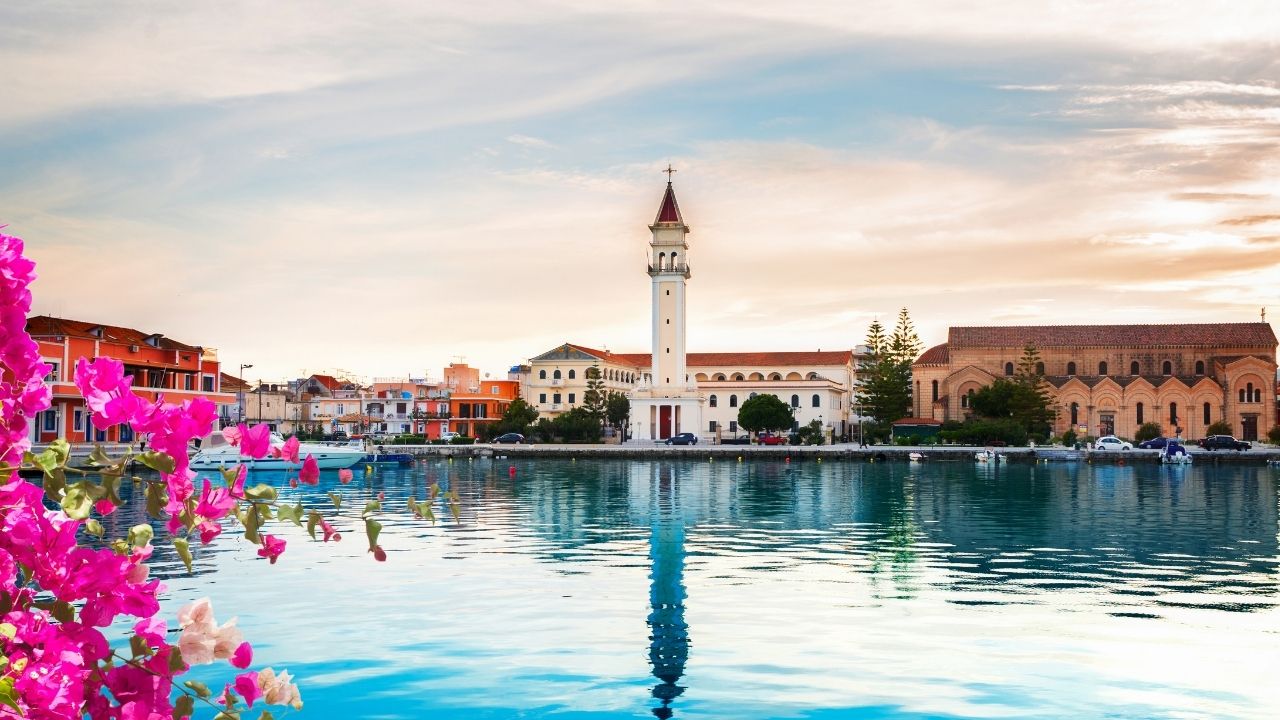
Zakynthos comes at you in sheer limestone faces, coves lit the dense mineral blue of deep Ionian water, and salt blown off the open sea. At Navagio, chalk cliffs close around a strip of brilliant sand where the wreck of the Panagiotis lies beached and weathered, giving the cove its unsettling, near-mythic pull. Out on the island’s northern edge, the Blue Caves shift with the sun, throwing bands of sapphire and quicksilver across the water and onto the hull as your boat slips through. Along the southern coast, the island takes on a gentler register. In the warm shallows and protected beaches of the south, Caretta caretta turtles return each year to lay their eggs, tying the island to a rhythm far older than summer. Zakynthos is defined as much by those nesting beaches and pale seabeds as by its cliffbound coves and water clear to the rock below.
Kythira
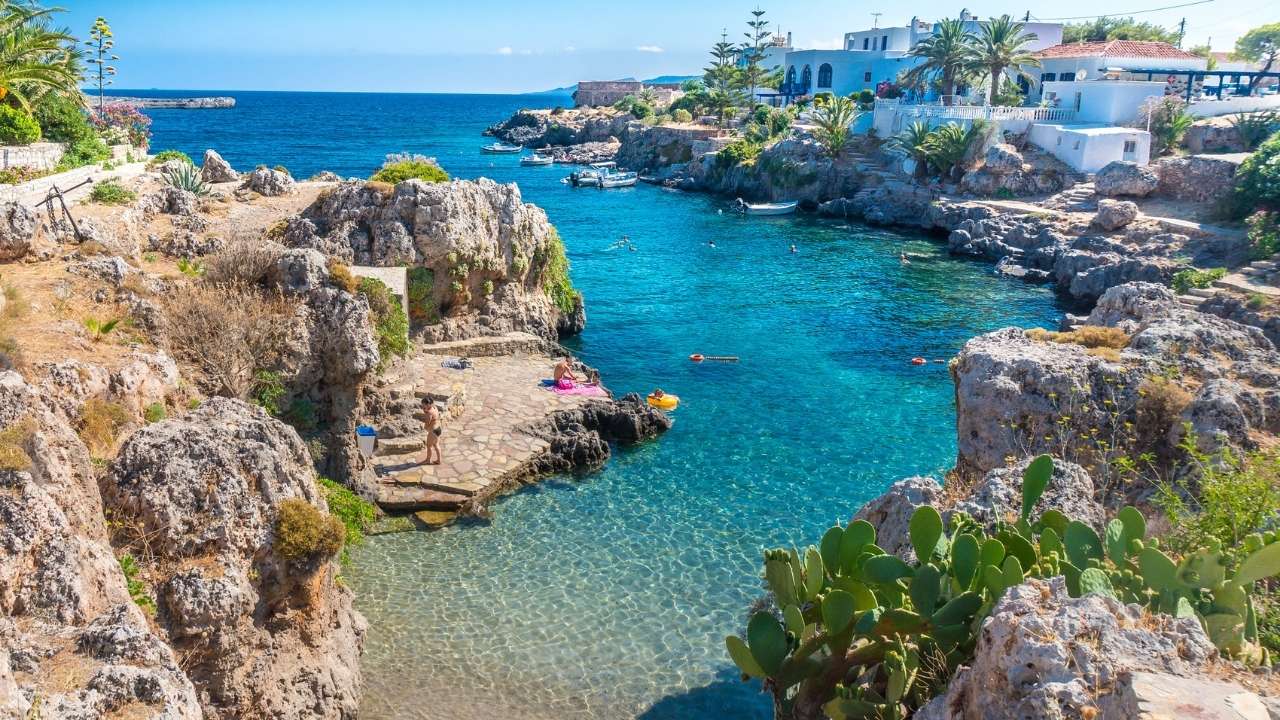
Kythira asks you to slow down and look closer. You catch it in the thyme-scented air moving through inland ravines, and in villages like Potamos and Aroniadika, where ochre walls, red-tiled roofs, and shuttered windows sit quietly in the afternoon heat. In Chora, the Venetian Castle stands above the sea, its worn stone and archways holding the island between the Ionian and the Aegean. Then the landscape shifts. In Mylopotamos, water slips beneath plane trees and gathers in cool pools, giving Kythira an unexpected green core. At Kaladi, steep steps lead to narrow pebbled coves cut into the cliffs, while Melidoni opens in a broad stretch of tawny sand. On Kythira, village squares stay shaded beneath plane trees, Chora’s lanes narrow between walls and old stone houses, and beaches such as Kaladi and Melidoni often feel strikingly unhurried even in high summer.
Dodecanese
Rhodes
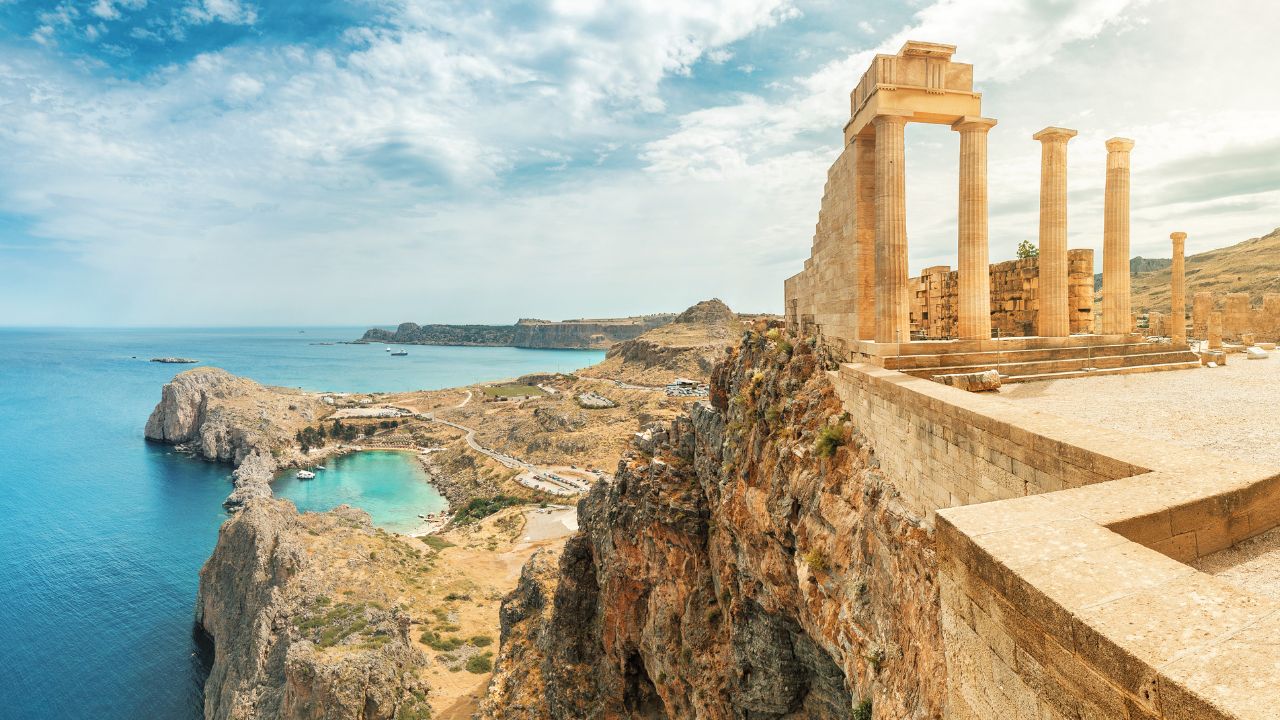
Rhodes greets you with bastions, salt air, and the layered marks of the Knights of St. John, Ottoman rule, and Italian occupation. In the medieval Old Town, cobbled lanes pass beneath arched gateways and along Gothic stone fronts, while the Palace of the Grand Master still presides with the stern poise of a fortress built to command the island’s edge. Then Lindos opens the view: an acropolis perched above sugar-cube houses, stepped passageways polished by centuries of feet, and courtyards washed in hard summer light. Below, St. Paul’s Bay curves into the headland in a sheet of clear, sheltered water. Yet Rhodes also knows how to soften. At Tsambika, the sand runs wide and golden, and at Anthony Quinn Bay, pine-clad slopes fall toward dark rock and water so transparent you can trace the seabed from the shore.
Patmos
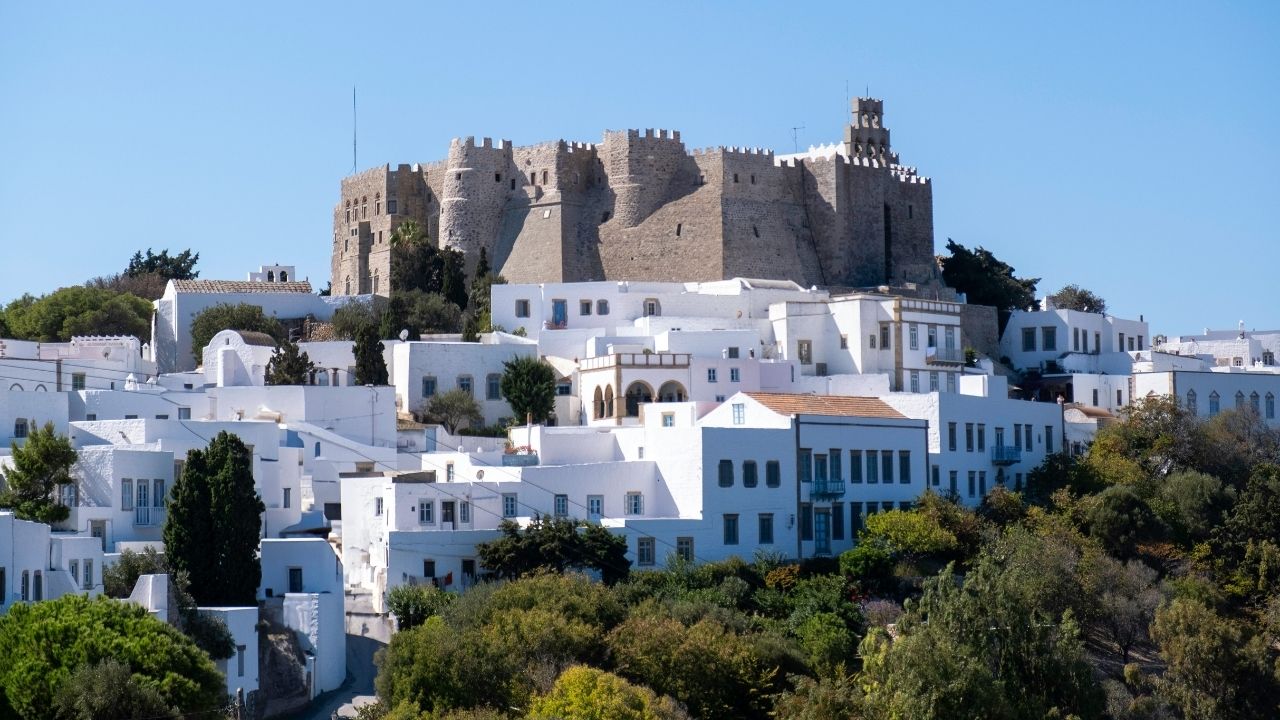
Patmos is shaped by the Monastery of Saint John above Chora, by lanes built tight against the hill, and by a long tradition of pilgrimage that still gives the island its measured pace. In Chora, the Monastery of Saint John rises above cube-shaped houses brushed in lime, like a citadel, with thick walls, arched passages, and sunlit courtyards that give the hilltop village a steady, grounded presence. Just below, the Cave of the Apocalypse focuses your senses completely: a narrow chamber in the rock, lit softly, where prayer and ritual have shaped the atmosphere for generations. In Grikos, wooden fishing boats drift in calm water beneath the striking outline of Petra, while Psili Ammos feels wind-scoured and remote, reached by boat or on foot before revealing its sweep of sand and windblown dunes.
Sporades
Skopelos
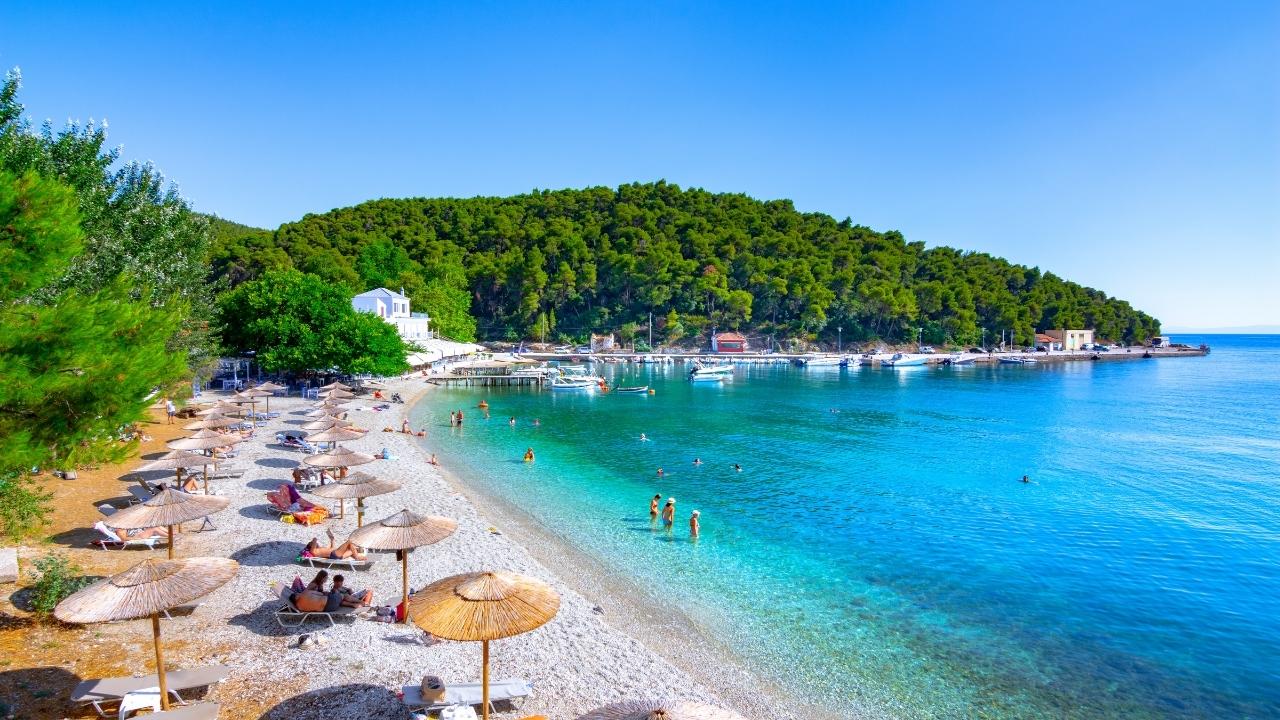
On Skopelos, the scent of sun-warmed Aleppo pine hangs in the air beneath the cool shade cast across its steep green slopes. Before you even reach the sea, you notice how the island’s forests press right down to the water’s edge, giving the coastline a richness that feels rare in the Aegean. At Kastani, pebbles, resin, and salt gather between pine-clad headlands, while the water shifts from clear jade at the shoreline to a darker blue beyond. High above the channel, the Chapel of Agios Ioannis rises from its rock in a clean, chalky silhouette, reached by a steep run of carved steps and rewarded with wide-open views of sea and sky. In Skopelos Town, tiled roofs, wooden balconies, and stone stairways descend the hillside in a setting that still feels lived-in, rooted, and distinctly its own.
Skiathos
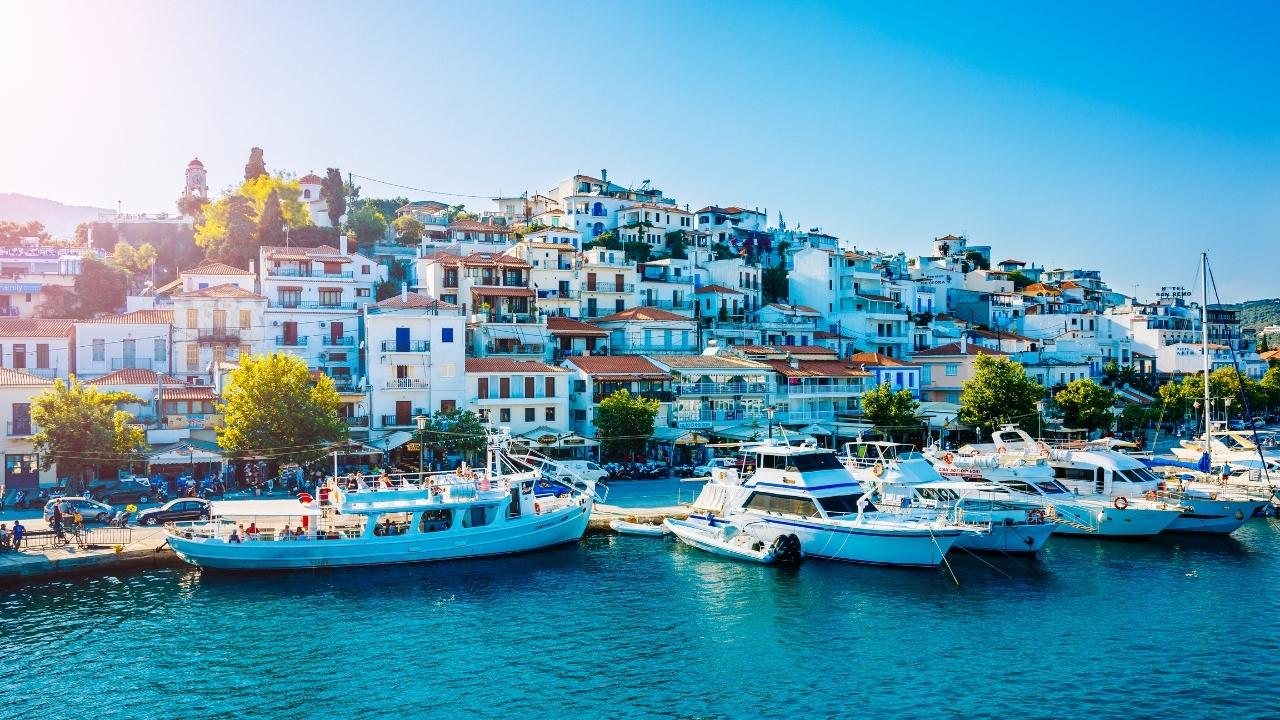
Skiathos comes through in harbor light catching on Bourtzi’s pines, in the smell of tarred rope and grilled squid along the old port, and in the steep steps of Skiathos Town threading past sun-bright plastered walls, carved doorframes, and bougainvillea-draped courtyards. Beyond the bustle, the island opens onto a shoreline of striking contrasts: Koukounaries, where dense umbrella pines press close to warm sand, and Lalaria, reached by boat beneath chalk-white cliffs and a wave-cut rock arch rising from water clear as glass. Skiathos also carries its seafaring history in practical, visible ways: captains’ houses near the harbor, hillside chapels reached by narrow roads, and an evening waterfront where ferries, fishing boats, and waterside tavernas keep the island closely tied to the sea.
Saronic Islands
Hydra
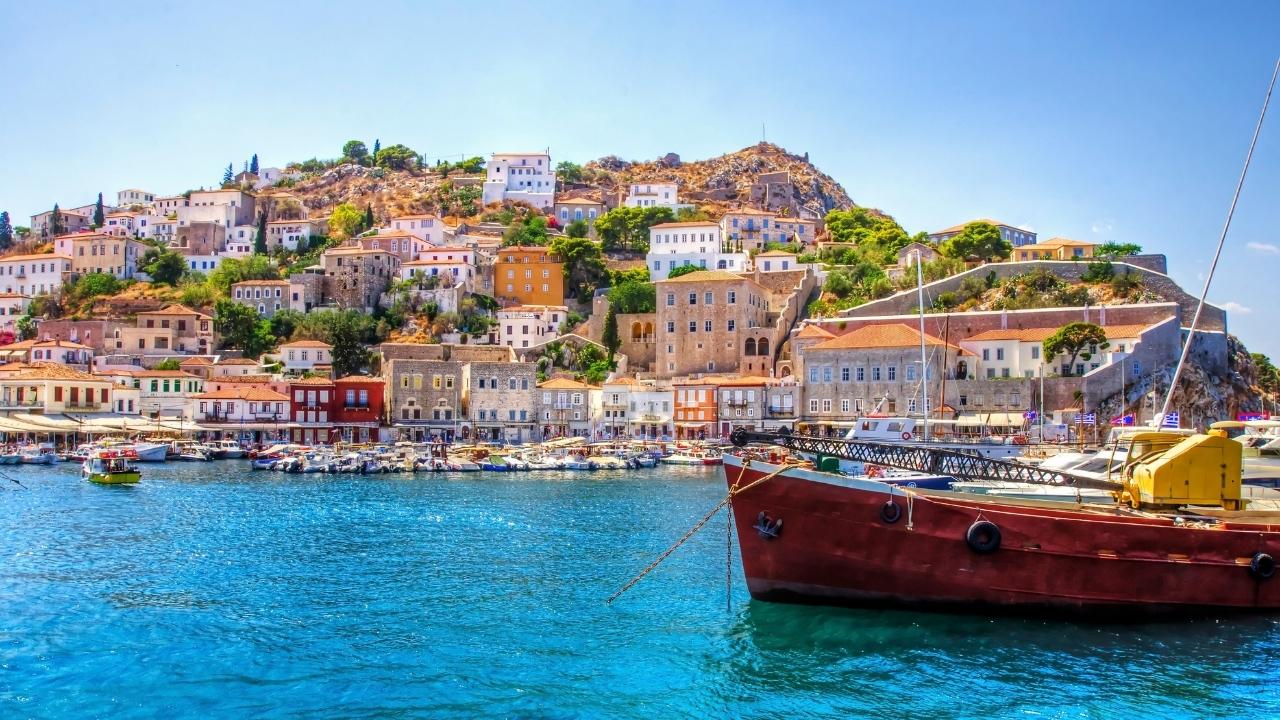
Hydra begins at the harbor’s edge, where stone mansions climb the amphitheater of the port and mule hooves ring across the quay. With no cars to blur the soundscape, you notice everything: ropes knocking softly against wooden masts, the low churn of arriving caïques, the murmur of conversation drifting from waterfront cafés as the light turns the hillside gold. This is an island shaped by shipowners and sea captains, and you can still read that history in the tall shuttered houses above the water, in the steep kalderimia leading inland, and in the disciplined grace of a place that has never hurried to modernize. Why did painters and poets linger here? Stand still for a moment and you’ll feel it: the clarity of the light, the salt on the air, and the harbor always shifting before your eyes.
Spetses
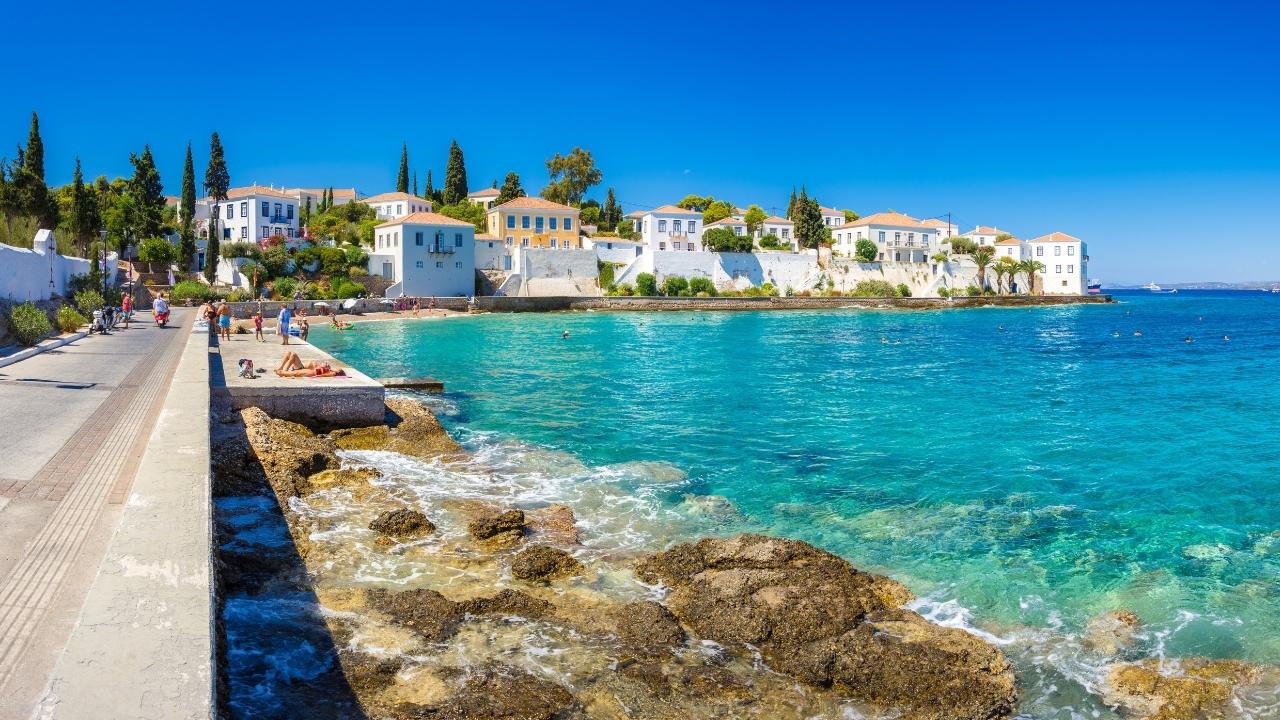
Dapia sets the tone for Spetses at once, where cannons still point seaward and horse-drawn carriages pass the quay with a measured clatter. You feel the island in the polish of old stone, in the sway of caiques beside moored yachts, and in the grand frontage of the Poseidonion, standing over the waterfront as it has for generations. This is an island shaped by captains, merchants, and sea routes, and that inheritance remains legible in the tall neoclassical mansions, wrought-iron balconies, and quiet courtyards tucked behind the promenade. Listen for the knock of rigging in the marina, the wheels on cobbles, the low evening conversation beneath the pines. As dusk settles, Dapia takes on a copper glow. In that evening light, the harbor fills with carriage wheels on stone, mast lines tapping in the marina, and quayside tables turned toward the old port.
Crete
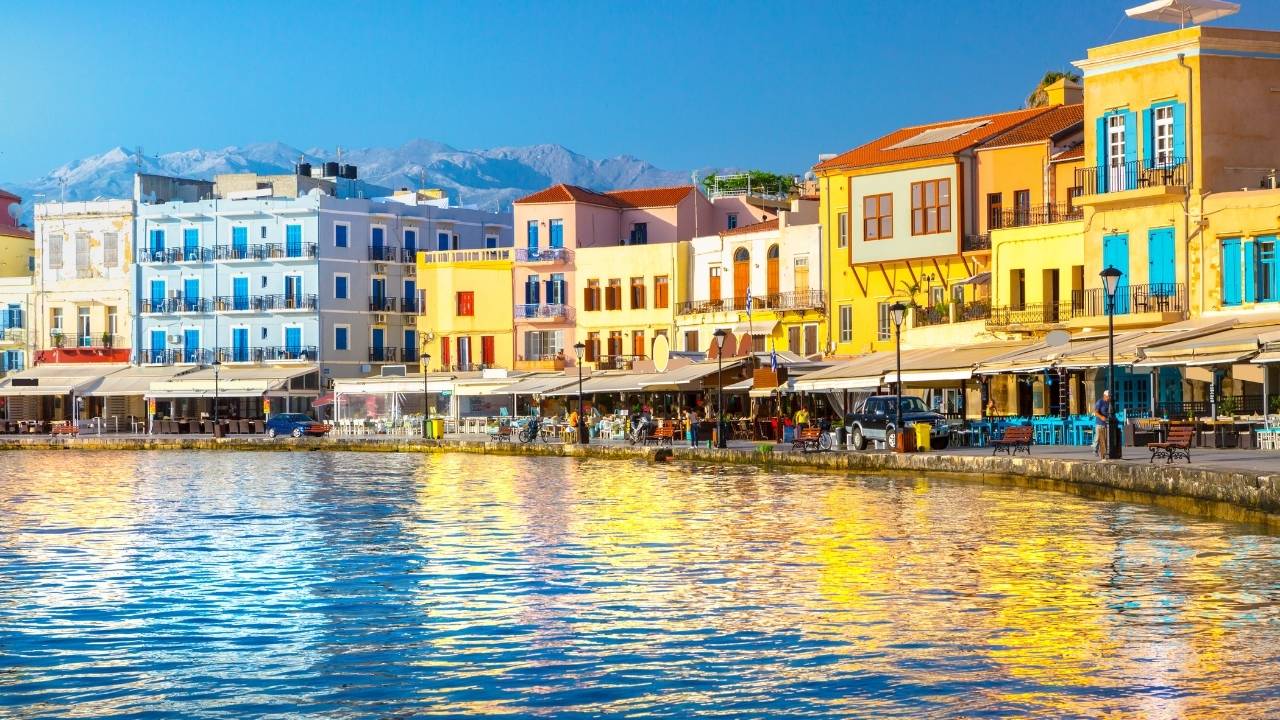
Crete begins in scale and sensation: the sweep of the Lefka Ori, the glare on Minoan stone, the scent of crushed sage and warm olive wood rising in the heat. At Knossos, fragments of cinnabar fresco, storerooms once filled with oil and grain, and the charged mythology of the bull-leaper world draw the island’s Bronze Age inheritance into sharp relief. Far to the south, Samaria carves through the White Mountains in sheer rock and silence, where kri-kri pick their way along the slopes and pine resin thickens the air above the gorge floor. Then comes the table, unmistakably Cretan: dakos softened with tomato and mizithra, peppery olive oil, lamb cooked slowly with bitter stamnagathi, and raki poured as if welcome were instinct. Snow, palms, lyra music, mountain villages, on Crete, each contrast feels earned.
Discover Our Tours
- EXPLORE THIS TRIP
 When to go: Apr to Oct Most Popular
Cyclades Highlights
Athens - Mykonos - Santorini
8 NightsFrom $3,920 ppEmbark on a private journey through the heart of the Cyclades, visiting three of Greece's most beloved... - EXPLORE THIS TRIP
Chasing Sunsets Across the Greek Islands
Athens - Naxos - Santorini - Crete
11 NightsFrom $4,555 ppThis meticulously crafted itinerary offers a romantic journey while highlighting some of the world's... - EXPLORE THIS TRIP
History, Islands & Sunsets
Athens - Naxos - Santorini
8 NightsFrom $3,975 ppThis 9-day private Greece tour divides your time between Athens and its iconic ancient wonders,...
Ready to plan your trip?
Whatever you want from your dream trip, our team ofexperts are ready to help.

COPYRIGHT © 2026 UNFORGETTABLE GREECE. ALL RIGHTS RESERVED