


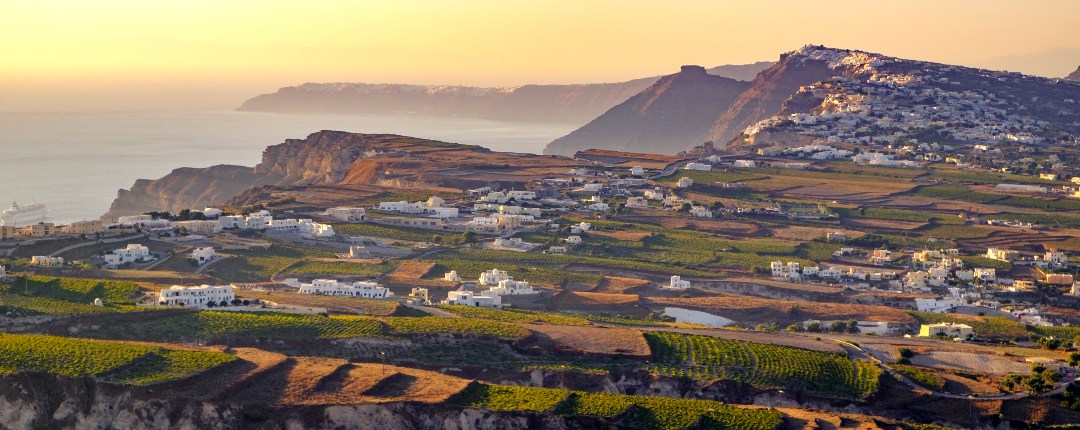
Santorini’s unique wine culture is deeply rooted in its ancient winemaking traditions and its volcanic terroir with evidence of viticulture emerging during the Minoan civilization (about 3000 BC to 1100 BC). The abundant and strong sunlight, dry summers, and minimal rainfall all come together to contribute to the distinct grape-growing conditions. But it’s the soil that makes Santorini wine especially unique, thanks to one of the most significant volcanic eruptions of all time, a blend of lava, volcanic ash, and pumice stone. The vine training that features the “kouloura” basket style, with the vines pruned into low, basket-like shapes helps to protect the grapes from harsh wind and retain moisture that allows them to thrive in the arid climate.


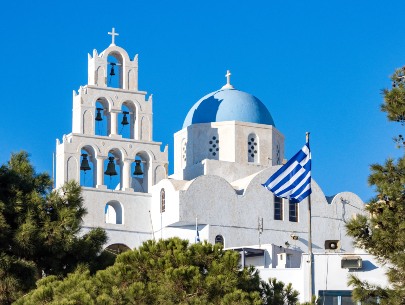
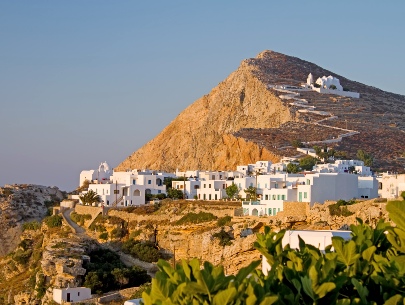
Santorini is renowned for its stunning natural beauty, while whitewashed buildings and blue-domed churches spill down the caldera, created by a massive 1600 BC volcanic eruption. The island also has mineral-rich volcanic soil producing unique wine varieties with exceptional flavors and aromas, as well as boasting Protected Designation of Origin (PDO) status. Although Santorini can be hot and wind-swept, daily morning mist provides just enough humidity to the vines to stress them which forces the roots to go deeper, resulting in a higher concentration of flavor and nutrients. Once fruiting begins the grapes grow sheltered in baskets called kouloura, creating a natural work of art. Explore Santorini’s wine culture with a journey through the island’s vineyards on your luxury Greece vacation.
The Unique Wine Culture of Santorini
The History of Wine in Santorini
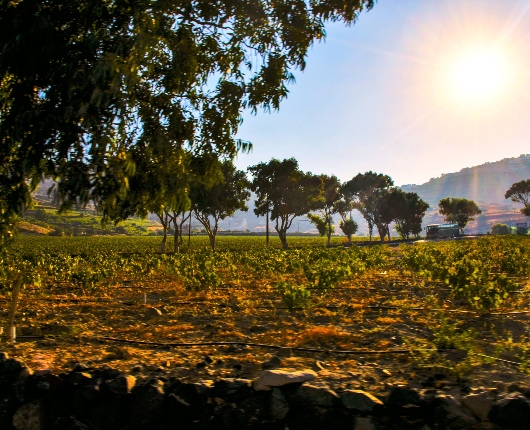
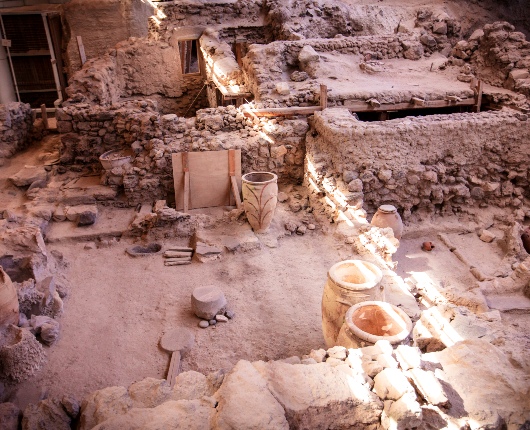
While Europe’s vine population was wiped out in the 19th century due to a phylloxera infestation, some of Santorini’s vines have a history dating back more than 400 years as the microscopic pest can’t survive in its soil. The winemaking traditions on the island are much older, however, dating back over 3,500 years. They reflect its ancient civilization, the Minoans, one of the earliest known settlers on Santorini, who cultivated grapes and produced wine as a significant part of their economy and culture. Archaeological finds, which include ancient wine presses and storage jars, highlight the importance of viticulture in the island’s past. Over the centuries, the winemaking practices were refined, particularly during the Byzantine period and under Venetian influence.
Key Wine Varieties of Santorini
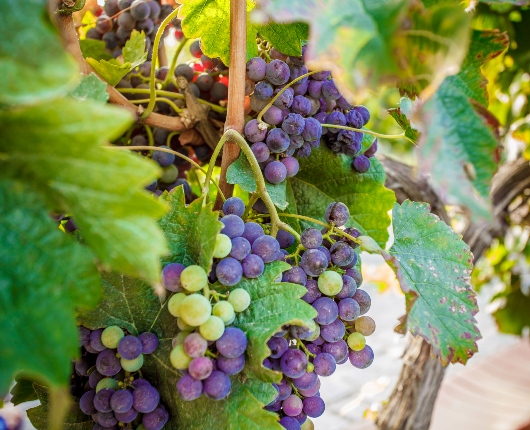
Assyrtiko
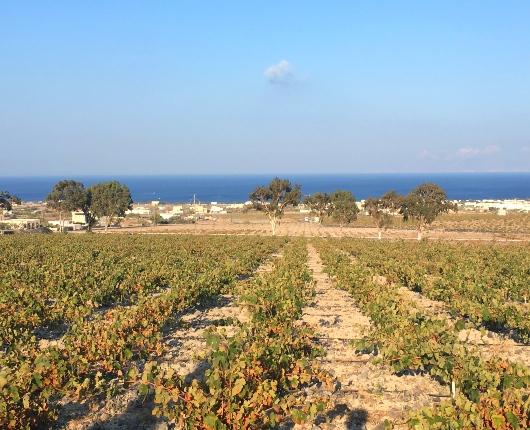
One of the key aspects of Santorini’s wine culture is the indigenous grape variety: Assyrtiko. This is the grape that’s been cultivated on the island for over 3,000 years. It’s become synonymous with the winemaking tradition here, thriving in the volcanic soil resulting in distinctively bold and mineral-driven wine. One of its defining characteristics is the high acidity that allows it to maintain freshness despite intense sun exposure. The acidity along with its ability to convey the volcanic terroir, results in exceptional white wines that are complex, crisp, and aromatic with notes of citrus, including grapefruit, lemon, and subtle herbal hints, providing a perfect pairing for the island’s fresh seafood, grilled vegetables and just about any light Mediterranean dish.
Athiri
An ancient white grape variety, Athiri has been used for centuries to produce dry white wines across the Aegean, particularly in the Cyclades and Dodecanese islands. It’s perfectly suited to the warm and arid conditions, known for its adaptability and versatility while thriving in Santorini’s distinctive volcanic soils which contribute to its unique flavor profile. While not as famous as Assyrtiko, it’s been gaining recognition for its high quality, often used in blends although it can also be crafted into varietal wines. The wine is light to medium in body, typically characterized by crisp acidity. It frequently exhibits floral aromas with notes of citrus fruits along with hints of green apple and pear. The minerality from the volcanic terroir adds intriguing complexity.
Aidani
Aidani is also a white wine grape, most commonly found growing in Santorini and Rhodes. It’s often blended with Assyrtiko to create a white blend known as Brousko which is lower in acidity and sugar as compared to Assyrtiko. The combination of the two varieties tends to produce wine that’s more consistent from vintage to vintage. The harvest times and proportions of the two (or more) grape varieties can also be altered to even out the variations that occur due to harvest conditions. It gives the wine a pale, lemon/green hue with hints of citrus, floral, and minerality. There are only 30 hectares of Aidani grapes grown on Santorini, making up just a tiny fraction of all the island’s grapes.
Visanto
Vinsanto is most renowned as a dessert wine although it can pair well with a variety of foods, including pastries, cheeses, and even savory dishes with its acidity balancing the sweetness. It’s celebrated for its rich flavors, primarily made from indigenous grape varieties, most notably Assyrtiko, although Aidani and Athiri are often used in blends. The grapes are typically harvested late in the season and sun-dried which concentrates the sugars and flavors, a method called passito. The wine is usually aged for several years, further intensifying the flavors while adding layers of complexity. It’s characterized by its amber color and complex aromas, with tasting notes that often include dried fruits like apricots alongside caramel, honey, nuts, and distinct minerality, reflecting the volcanic soil.
Santorini’s Vineyards

Image Credit - Santo Wines
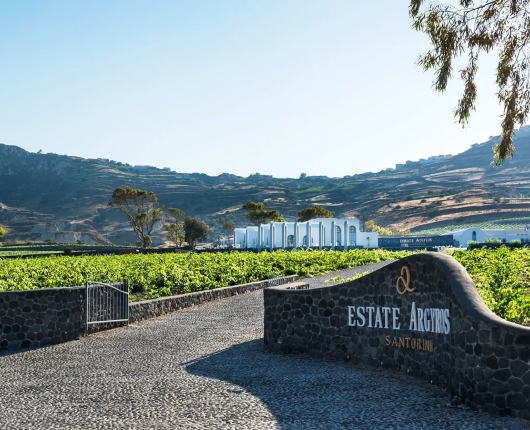
Image Credit - Estate Argyros
Santo Wines
Santo is a cooperative winery in the village of Pyrgos. Large and modern, a visit brings breathtaking views of the caldera cliffs along with opportunities for a variety of guided tours, tastings, and more. One of Santorini’s most popular wineries, it offers a long list of options, including white, red, sparkling, oak-aged, unoaked, and a Vinsanto dessert wine. There’s also a food and wine bar called ASPA BALCONY open during the summer where you can enjoy the wines paired with dishes made from local ingredients. It includes a la carte items, prix fixe gastronomy menus, and even a kids’ menu. If you’d like to put your own picnic together, there’s a deli shop for purchasing Santo foods and wine as well.
Gavalas Winery
Located in Megalochori, family-run Gavalas Winery offers intimate wine tasting experiences that might make you feel like you’re visiting a friend who has a winery. Most often you’ll be able to chat with one of the family members who will fill you in on its history, tell you all about the grapes, and the winemaking process, with one-hour tours revealing it all firsthand. You’ll visit the old stone-built cellars and walk to the modern facilities before tasting the results of the high-quality grapes it grows. Sommelier-led tastings are enjoyed in the rooftop garden or the serene courtyard, allowing visitors to get familiar with the characteristics of the terroir, with a view of the black sand beach of Perissa in the distance.
Estate Argyros
Run by the Argyros family, Estate Argyros is one of Santorini’s oldest wineries, producing wine for over a century. Tucked into the estate’s vineyards, providing a fascinating glimpse at the unique method used to grow grapes. You’ll see them on the ground protected in natural baskets called koulouris which protect them from the elements, including powerful winds and the sun’s searing heat. Its top wine is the dessert wine, Vinsanto, which is produced using the ancient technique of drying grapes in the sun until they’ve almost become raisins, in order to concentrate the sugars. It results in a naturally sweet, delicious wine that’s well-balanced by the acidity of the grapes. Wine tastings, food and wine pairings, and tours are all available.
Domaine Sigalas
Located in the village of Baxedes, one of the closest wineries to famous Oia, Domaine Siglas was established in 1991 by the Sigalas family. It attracts both wine enthusiasts and serious foodies with a six-course tasting menu that can provide the ultimate experience, with the wines thoughtfully hand-selected and presented to pair with every course. The selection of wines is outstanding, with the opportunity to taste over 10 different offerings. Visitors can also enjoy a tour of the vineyard and winery that includes a tasting of eight wines or select a tour that includes the eight wines plus lunch. You’ll be able to sip and dine on the picturesque terrace that sits in the heart of the vineyards for an especially romantic experience.
Venetsanos Winery
One of the best wineries for tasting with a view of the caldera, Venetsanos Winery is located in Megalochori and provides a perfect venue for sipping without the crowds. Come sunset it can get quite busy, however, thanks to its vantage point for watching a colorful show in the sky. From May through mid-October, visitors can enjoy traditional foods and a variety of cheeses from the a la carte menu on the beautiful Sunset Terrace. If you’d like to enjoy this experience, be sure to make your reservations well ahead, or plan to visit as part of a Greece private tour to ensure a seat. There are several wines available for tasting which are mainly produced using Assyrtiko and Mandilaria grapes.
Wine Tasting Tours & Experiences
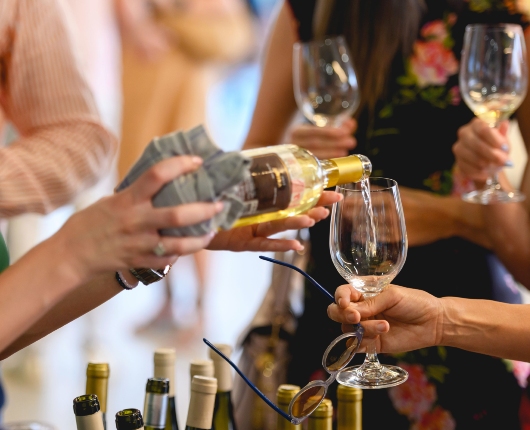
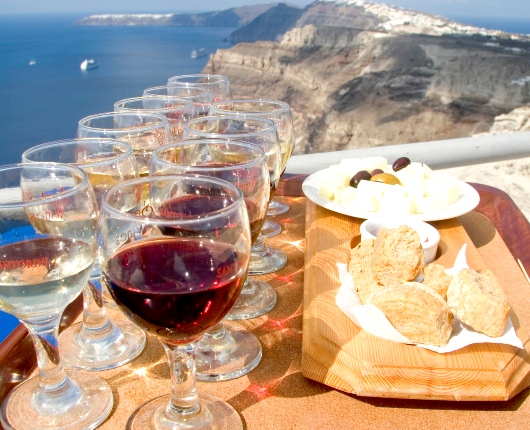
With Santorini producing such unique and flavorful wines, many come to the island to enjoy it, making it no surprise that there are many different wine tasting tours and experiences available. Guided tours of the Santorini Wine Museum, housed in a former winery, will reveal all you need to know about Santorini’s winemaking history. You’ll discover the traditional viticulture and winemaking techniques while tasting a selection of local wines, including the most famous produced on the island, Assyrtiko and Vinsanto. There are several family-owned boutique wineries, including Santo Wines, that provide intimate tours and experiences like vineyard walks along with culinary pairings. Or join a full-day guided tour that will bring you to traditional wineries to enjoy a feast with locally made wines.
Local Food & Wine Pairings
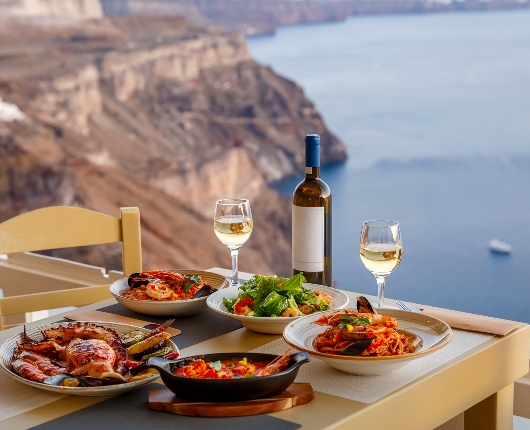
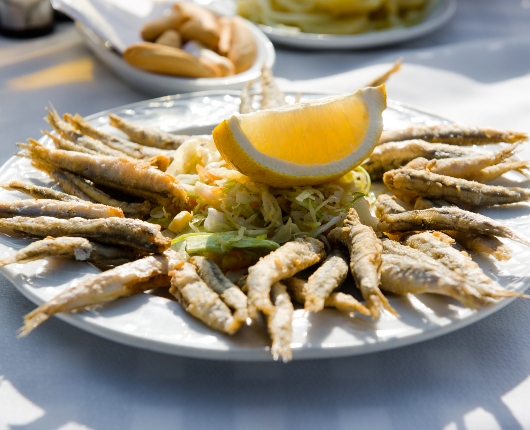
You could easily fill your entire Santorini enjoying local food and wine pairings. Join a tour or head out on your own. If you like fresh seafood, it’s found in abundance here, including fresh grilled fish seasoned with lemon and herbs which pairs perfectly with Assyrtiko, the island’s signature white wine, with high acidity and mineral notes. Greek salads, with olives, cucumbers, tomatoes, and feta cheese, also goes quite well with Assyrtiko. We like stuffed vine leaves (dolmades) with a light rosé made from the indigenous grape Aidani to bring out the citrus and herbal notes of the dish. Chicken or pork souvlaki, marinated and grilled, are an outstanding pair with red wines like Mavrotragano that complement the smoky flavors.
Best Time to Visit Santorini for Wine Tasting

Fall is often considered the best time of year to visit Santorini, particularly mid-September through October, including those seeking a wine-focused experience. The days are often pleasantly warm, with temperatures ranging from the upper 60s to low 80s. Plus the sea will still be warm for swimming and you’ll be able to enjoy sightseeing on the island without summer’s thick visitor crowds. It’s the perfect time to explore the thriving wine scene with production in full swing. You’ll have the chance to witness the “linos,” a traditional method of grape crushing. While modern technology has mostly taken over, there are some winemakers still using the ancient practice, with large wooden presses extracting the juice, often accompanied by local music and dancing.
Ready to plan your trip?
Whatever you want from your dream trip, our team ofexperts are ready to help.

COPYRIGHT © 2026 UNFORGETTABLE GREECE. ALL RIGHTS RESERVED