


Guide to the Dodecanese Islands
The Dodecanese Islands are the furthest southeast you’ll find in Greece, with several close enough to Turkey for day trips. The island group is made up of 165 islands, 26 of which are inhabited, some with jam-packed beaches and upscale resorts while others are ideal for those who prefer more seclusion away from the hordes. Their position on a route to the Middle East resulted in a turbulent history with centuries of rule by Crusaders, Ottomans, and Italians. As a result, you’ll experience a delightful blend of cultures and architectural styles with nearly all hosting Classical remains. There are plenty of beaches for relaxation and activities throughout. This guide to the Dodecanese can help you plan the ideal Greece vacation.
Where are the Dodecanese Islands?
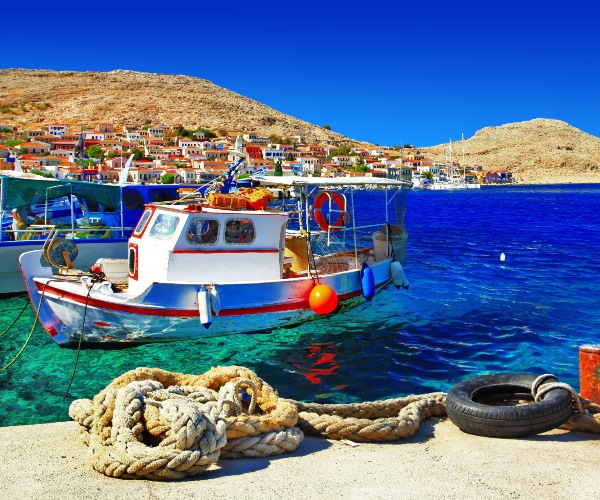
The Dodecanese Islands are located in the southeastern Aegean Sea between the Cyclades and Turkey’s Anatolian Peninsula. The farthest island group from the Greek mainland, they aren’t as popular as the Cyclades, standing out for their tranquil beaches and medieval architecture. The two largest, Rhodes and Kos, have an especially thriving tourism industry focused on beaches and nightlife, which replaced traditional agriculture. Other popular islands like Symi and Halki built their wealth from the sea, particularly in the 19th century, resulting in appealing port towns. Patmos, another favorite among travelers, offers landscapes and architecture that’s more similar to the Cyclades. Most of the other Dodecanese are smaller in size and generally considered to be more alternative vacation destinations.
Best Time to Visit the Dodecanese
The summer months are the busiest in the Dodecanese. The heat is sweltering and the accommodation prices will be at their highest, but it’s ideal for those who prefer days spent at the beach and buzzing nightlife. For those who prefer milder but warm temperatures without the crowds, providing more comfortable sightseeing, consider spring or fall. May through early June and mid-September through mid-October are two of the best times to visit in particular. If you want to enjoy swimming, early fall is ideal with the sea having warmed all summer. Rhodes is a great island to visit in the winter if you’re more interested in historic sites. It doesn’t shut down and temperatures hover around the upper 50s to low 60s.
How to Get to the Dodecanese
There are regular ferries from Piraeus Port in Athens to the Dodecanese Islands; however, it’s a very long journey, ranging from 13 to 20 hours depending on the weather and the particular type of vessel. The quicker option is to fly from Athens International Airport. There are direct flights to the airports in Karpathos, Kos, and Rhodes. If you want to visit one of the other islands in the Dodecanese you might fly to Rhodes, for example, and then catch a ferry. Regular ferries run throughout the archipelago. In the summer there are also ferries from Crete to Kasos and Karpathos. You can also take ferries from Turkey, running from Bodrum to Kos Town, and Marmaris to Rhodes Town during the summer.
Notable Islands of the Dodecanese
Rhodes
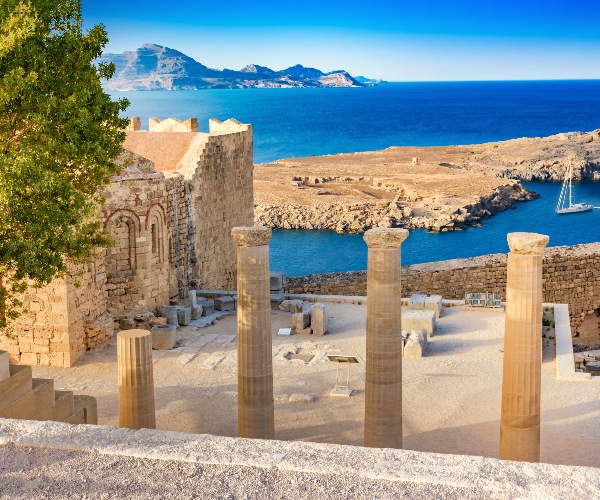
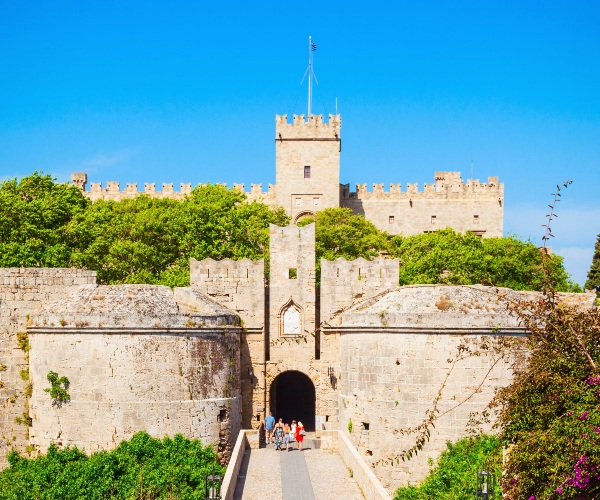
Rhodes offers an ideal getaway for those seeking a mix of time at the beach and intriguing historic sites. Rhodes Town is renowned for its impressive mix of architecture, with its cultural identity distinct from other islands in Greece. Old Town Rhodes is dominated by the 14th-century Palace of the Grand Master, while the Street of Knights features beautiful restored medieval buildings. The island is home to many spectacular beaches, including Pefkos with shallow cobalt waters ideal for swimming. Those who enjoy wind ports should head to Ialyssos Beach for kitesurfing, windsurfing, or sailing. Rhodes is home to the lush Valley of the Butterflies in the Petaloudes area with paths that wind to tranquil streams and waterfalls to stroll while watching the many butterflies.
Kos
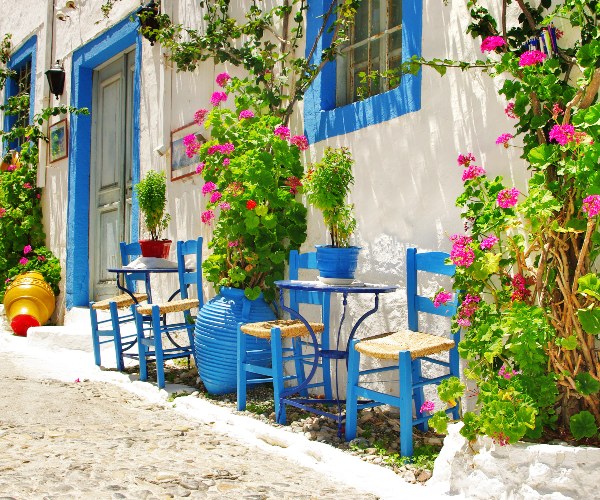
Kos Island also offers rich history that includes the extensive ruins of a Roman city that dates back to the 3rd century B.C. There’s a well-preserved theater, bath houses, Doric columns, a private villa and mosaics. In Kos Town, you’ll find the Archaeological Museum from remains from the Roman and Hellenistic periods. Kos is also renowned as the home of the more than 2,500-year-old plane tree where Hippocrates, the father of Western medicine used to teach. There’s medieval architecture to discover too, including the 14th-century Neratzia Castle. Nature lovers will find plenty, with mountains, parks like Therma and Zia home to a variety of wildlife, and a coastline with idyllic beaches, most of which are sandy with crystal-clear turquoise waters.
Patmos
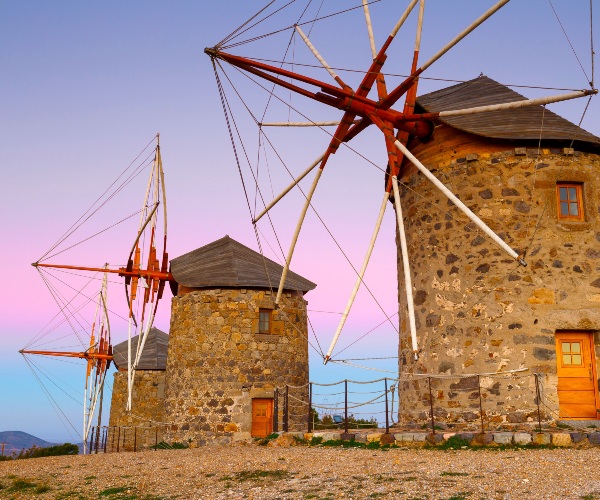
The secluded, remote island of Patmos is located between Leros, Ikaria, and Fourni. It’s best known as the place where Saint John is said to have written the closing pages of the New Testament, the Book of Revelations, in the Cave of the Apocalypse. The cave is where all religions say the world’s creator appeared. At the hilltop Chora, one can visit the Monastery of Saint John. The narrow streets of the Old Town are lined with medieval churches, grand mansions, and traditional whitewashed homes. There’s lots of spectacular nature too, including lush mountains with forests for hiking and a beautiful shoreline with sandy beaches, some of which are tucked into hidden coves. All are framed by crystal-clear turquoise water for swimming.

Symi
The mountainous island of Symi is just an hour’s ferry ride from Rhodes but there are far fewer tourists here. Many come to enjoy its beaches with crystal-clear water, most of which can only be reached by the island’s famous water taxis. Its colorful main town was built around a natural harbor right into the side of a mountain. It’s a vision, with vibrantly painted homes clinging precariously to the rocky hills overlooking it. Small boats and moored yachts bob up and down on one side while traditional cafes and fish tavernas with Symi shrimp on the menu are on the other. Symi had a long tradition of sponge diving and while it has faded out, there are still many types of sponges sold in souvenir shops.
Other Dodecanese Islands
Astypalaia
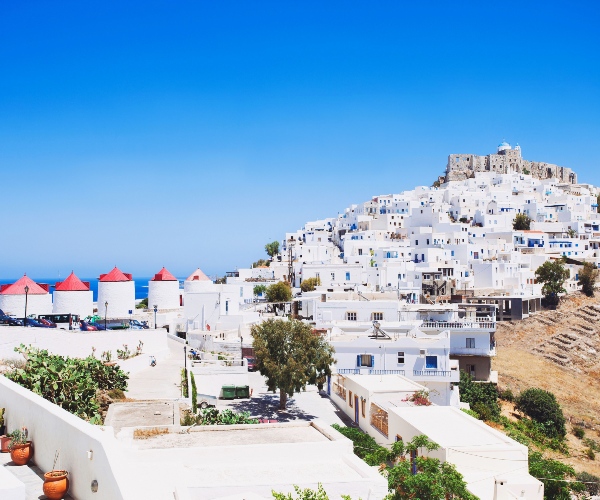
The westernmost island in the Dodecanese, Astypalaia is home to just over 1,300 residents, providing plenty of tranquility, a centuries-old history, whitewashed villages, and serene beaches while surrounded by sapphire waters. It dates back to ancient times while the Castle of Astypalaia on Chora’s highest hill can be seen from miles away. Built by the Venetians in the early 13th century, its walls contain tone memorial tablets. There are a number of churches at its base, including the 18th-century Portaitissa Orthodox Church, built by a Gerek monk, the island’s most important Orthodox pilgrimage site. Drakos Cave, or the Dragon Cave, is a top attraction with stalactites and stalagmites. It’s also said to have been a hiding place of pirate treasure.
Chalki
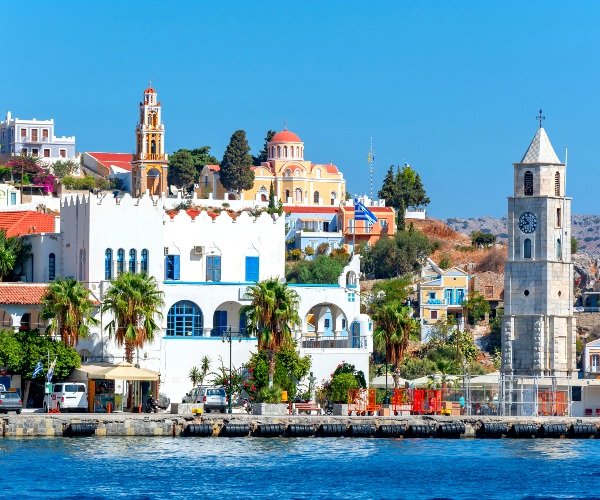
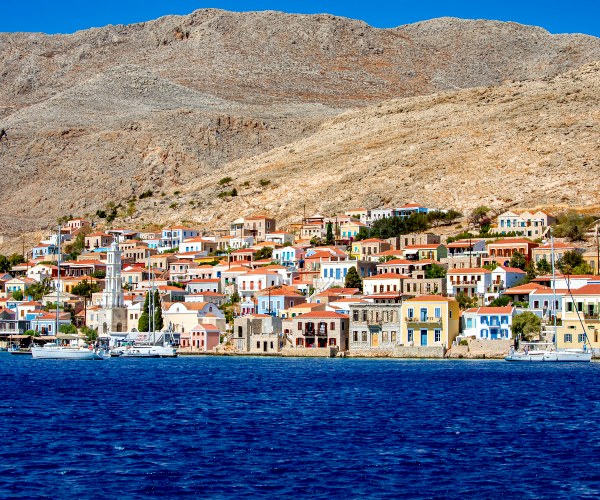
Chalki, or Halki as it’s also known, is an island gem near much busier Rhodes. It’s even quieter than Symi making for a blissfully relaxed getaway with verdant landscape, mountains and amazing beaches. The main village, also Chalki, offers lots of charm with a maze of cobbled streets. It’s the port and capital, established in the 19th century during prosperous times with traditional homes built amphitheatrically around the harbor. Highlights include the 1861 church of St. Nicholas with its bell tower, the stone clock tower, and the neoclassical Council building. Just west is Chorio built around a hill topped by a fort with historic stone houses. Potamos is the best beach, with umbrellas and loungers, just a short walk from the capital.
Kalymnos
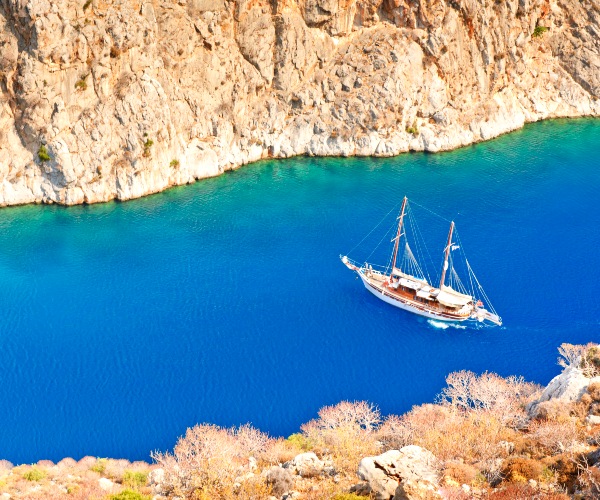
While not the island for raging nightlife, Kaymons is ideal for adventurers and those seeking tranquility. It provides a more unique experience, having managed to remain wild and unspoiled. One of the most authentic destinations in the Dodecanese, and throughout the Greek islands, it’s known for its craggy cliffs and steep mountains that attract expert climbers as well as its sponge industry as a former international supplier. While sponge fishing is still practiced, it’s much more limited now. Visitors can enjoy swimming and snorkeling in beautiful blue waters, mouthwatering seafood, and exploring the picturesque ancient area in the region of Chorio. The capital and port is known for its orange and pink painted buildings with narrow streets, spread amphitheatrically across two hills.
Karpathos
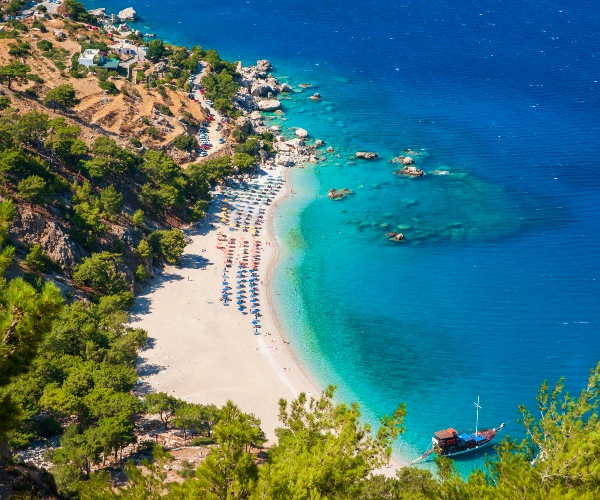
The second largest island in the Dodecanese, Karpathos is often overlooked but it’s perfect for travelers who want to avoid the crowds. One of the country’s best-kept secrets, it’s home to over 50 beaches, with both pebbled and sandy stretches edged by emerald water. The villages have an old-fashioned atmosphere, like remote Olympos, tucked into the mountains where women still don the traditional dress. Wandering the meandering alleyways with pastel-painted homes is especially enjoyable with spectacular views around nearly every corner. Othos is the island’s highest village, home to the Folklore Museum, while coastal resort towns like Lefkos and Fininki with its fresh fish taverns are still devoted to their rich traditions, including the architecture, music, and feasts.
Kastellorizo
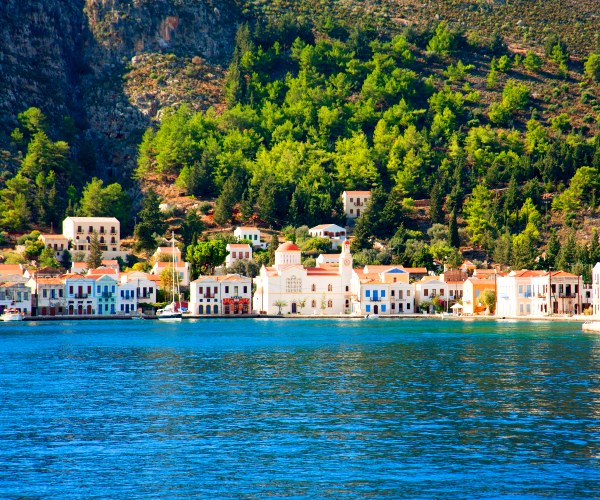
Secluded Kastellorizo is just over a mile from Turkey’s Lycian coast, a 10-minute speedboat ride or 30 minutes by ferry. For a small island, it offers a lot, from castles and ancient fortresses to mosques, windmills, historic markets, and wine presses. The only populated area is the capital, known as Kastelorizo and Megisti, the island’s name in antiquity. Located on the southeast side, it’s also the only village and harbor. Filled with colorful facades, neoclassical houses and wooden balconies, it’s incredibly picturesque. You’ll find plenty of shops, bars, cafes, and restaurants in addition to the ruins of a castle built by the Knights of Saint John. There is no nightlife to speak of, with the social scene revolving around the waterfront.

Leipsoi
Leipso, also known as Lipsi, is located between Leros and Patmos as one of a cluster of two dozen islets in the northern Dodecanese. It’s the largest and only inhabited island, offering striking natural beauty and serene beaches. The main settlement of Lipsi is a traditional Aegean village with lots of blue and white, spread amphitheatrically at the island’s entrance with the view dominated by the church of Saint John the Theologian with a blue dome and two bell towers. Whitewashed homes are draped in bougainvillea and you’ll discover many quaint shops selling local handcrafted items along with inviting cafes. At the center of town next to the church is Nikiforio Museum, the folklore, historical, and religious museum.
Leros
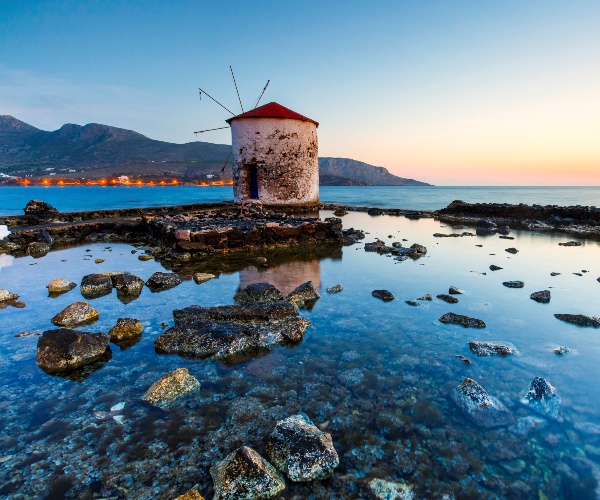
Hilly Leros is nestled between Patmos, Kalymnos, and Lipsi, just opposite the Turkish coastline. It features lush hills, idyllic beaches ranging from small stretches to large, sandy spans. Some offer many tourist facilities while others are tucked into secluded coves. Time seems to move at a slower pace here, away from the crowded tourist destinations. One can wander tranquil streets with buildings in a variety of architectural styles, including Cycladic, neoclassic, Italian, and art deco. The capital of Lakki is rather unusual with much of its architecture built in the 1920s and 1930s Italian razionalismo style, an urban design unusual in Greece. The most notable structure is the 11th-century Leros Castle in Panteli, a Byzantine fortress and a symbol of the island.

Nisyros
Nisyros has also managed to remain untouched by heavy tourism. As the youngest volcanic island in Greece with the last significant eruption in 1888, steam still seeps from gaps in the stones. Sometimes described as an open-air geology museum, the buildings here, including homes, castles, and temples, were constructed using various elements from the volcano, including hardened lava and pumice. The colors are striking throughout with lush landscapes and blue-domed churches, while ancient sites buried under blankets of ash are waiting to be unearthed. There are multiple museums worth exploring, including the Archaeological Museum in the main town of Mandraki, with collections from prehistoric to post-Byzantine times. If you’re interested in the volcano, learn more about it at the Volcanological Museum in Nikia.
Tilos
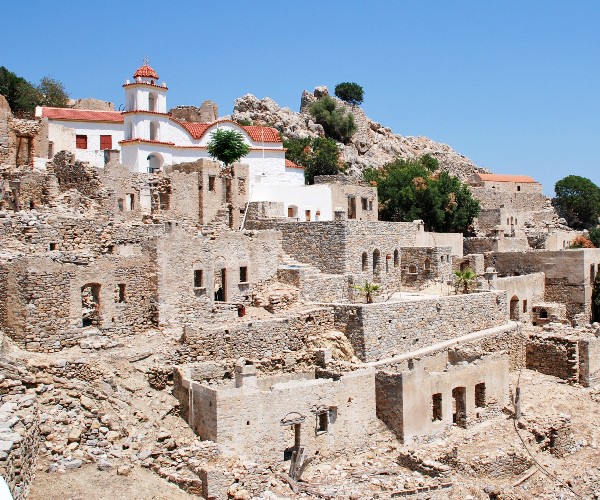
Tilos offers remote, quiet beauty with little tourism development. There are no sprawling resorts or exclusive beach clubs, but the island does offer decent beaches like Eristos with pebble and sand stretches, beautiful views, a cantina and beach cafe. It’s all about peace and tranquility, with an interesting historic and geological past that can be seen everywhere from the abandoned village of Mikro Chorio to the Monastery of Saint Panteleimon. A unique Russian monastery, the original building dates to the early 11th-century although the current one dates to 1765. At the heart of the island is Charkadio Cave, where the first fossilized teeth of dwarf elephants were discovered with the fines displayed at the Museum of Dwarf Elephants just outside the cave.
Activities & Attractions
Historical & Cultural Sites
Historical sites dating to Ottoman, Byzantine, medieval, and well beyond can be found throughout the Dodecanese. With many different cultures controlling the islands over centuries, there’s a rich cultural heritage to explore. UNESCO-listed Old Town Rhodes boasts a maze of medieval streets with the Palace of the Grand Masters offering one of the few examples in Greece of the Gothic architectural style. In the Lower Town, you’ll see Gothic buildings co-existing with Ottoman mosques and public baths. Kos Island is home to the imposing 14th-century medieval Castle of the Knights and the famous plane tree of Hippocrates, who taught his students beneath its shade. Patmos is renowned as the place where Saint John the Divine received visions leading to the Book of Revelations.
Outdoor Adventures
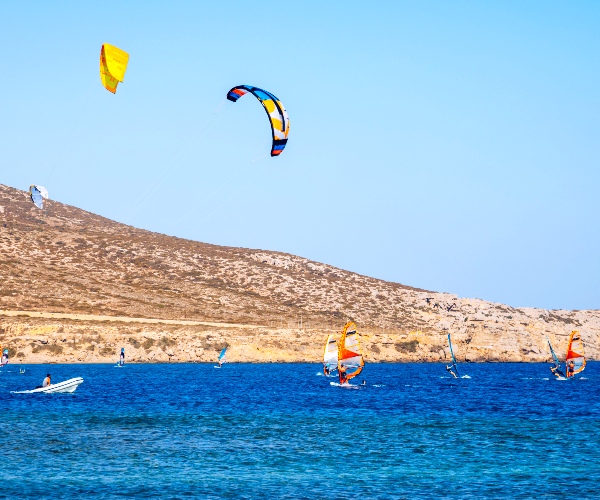
A wealth of outdoor activities are on offer in the Dodecanese, on land and water. Wind sports like kitesurfing and windsurfing are especially popular on Rhodes. Prassonisi at its southern tip has become world-famous for attracting experienced windsurfers to ride the powerful waves. Of course, you can swim off any of the islands’ shores. Symi in particular is renowned for its calm, clear turquoise water. Snorkeling, diving, and boat tours are just a few of the other water-related activities. On land, you might embark on a 4X4 to discover hidden places on Rhodes or take a hike with many islands ideal for scenic treks, including Rhodes, Symi, Kos, and Tilos with its largely untouched landscapes and old but still intact donkey trails.
Beaches
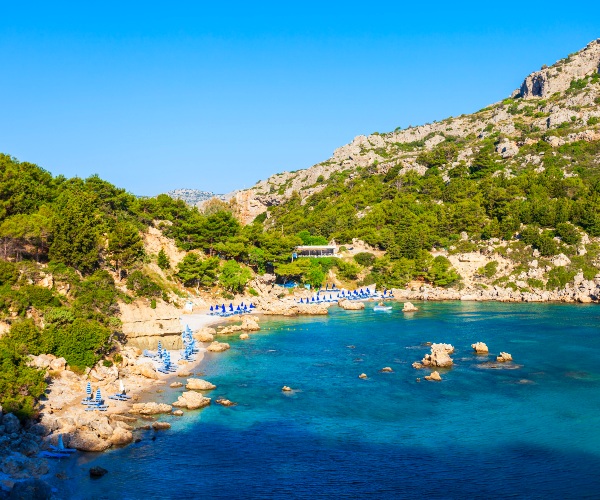
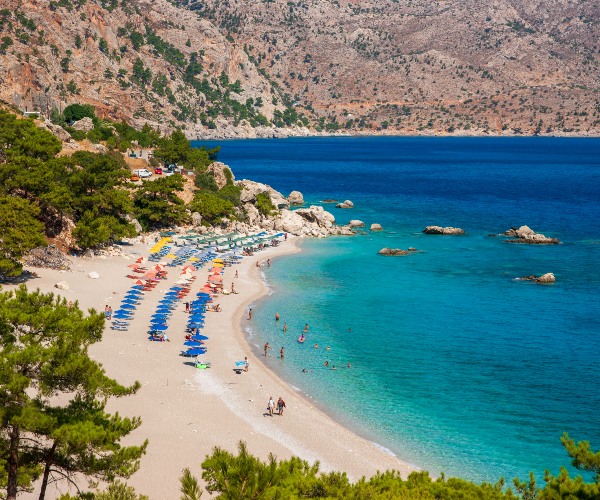
You’ll find both sandy beaches and pebbly stretches through the Dodecanese. There’s something for everyone in this island group whether seeking tranquility or lively action. Some are world-renowned for their spectacular scenery and turquoise waters. Apella Beach is the perfect example on Karpathos, nestled in a picturesque cove with pristine white sands and surreal clear blue waters with pine trees for shade. Tsambika Beach on Rhodes is an idyllic stretch of golden sands edging turquoise waters, ideal for those who want to enjoy beach clubs and a wide range of watersports. On Lipsi, you’ll find secluded Elena Beach with white sands and clear water for snorkeling. On Kalymnos Island there are many family-friendly stretches like Kantouni, a long sandy stretch.
Dining & Nightlife
Local Cuisine
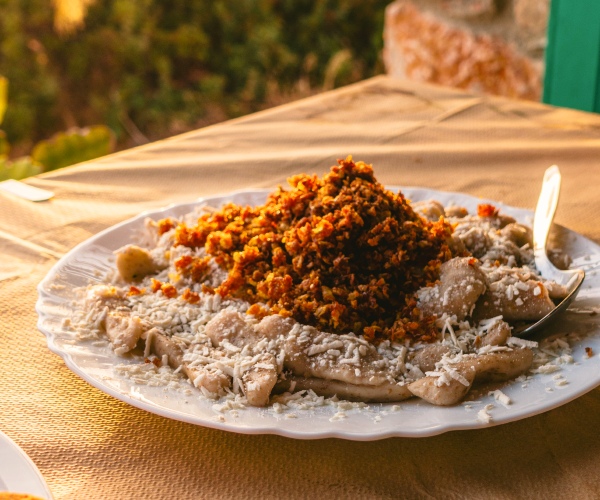
Each of the Dodecanese Islands have their own food traditions with cuisine that includes traditional dishes and lots of fresh, local seafood. Karpathos is known for its local pasta called makarounes, made by hand using local flour and served with mizithra cheese and sauteed onions. The village of Apollo on Rhodes is renowned for slow-roasted goat, cooked in a wood-fired oven with beans and chickpeas, and served with onions and potatoes. On many islands, local eateries serve lamb shanks in a traditional dish called kapama. Pork is common throughout, such as pork with bulgar wheat on Kos while nearby Nisyros offers a similar dish known as moukounies. Symi is known for its Symi shrimp and squid cooked with loupevra, a wild green.
Nightlife
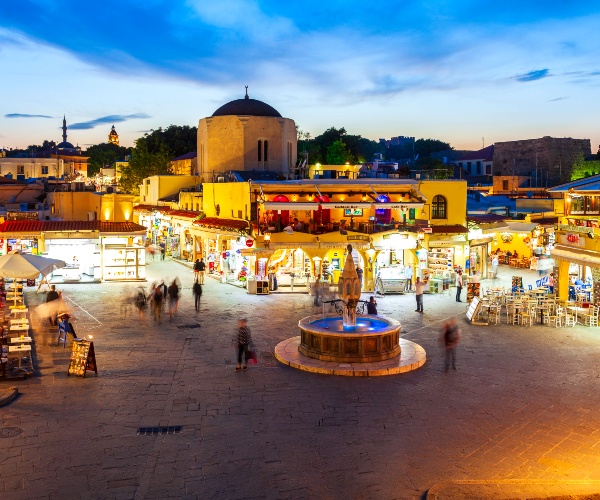
Some of the best nightlife in the Dodecanese can be found on Rhodes, including clubs that stay open ’till sunrise in Faliraki. There are late-night bars in Rhodes Town, Theologos, and Lindos too. Nearly every place on the island has something to do after dark from beach parties to live music. Kos Island attracts plenty of partiers with all types of clubs and bars in Kos Town which serves as the center of it all, much of it concentrated on two streets.There are many different venues offering live music, with everything from modern pop, rock, blues, and jazz to electronic. While most of the other islands aren’t renowned for nightlife, you can almost always find at least some relaxed cafe/bars.
Ready to plan your trip?
Whatever you want from your dream trip, our team ofexperts are ready to help.

COPYRIGHT © 2026 UNFORGETTABLE GREECE. ALL RIGHTS RESERVED