


Best Historic Sites to Visit in Greece
As the birthplace of democracy and the cradle of Western civilization, Greece is at or near the top of most history enthusiasts’ bucket lists. Excavations have shown that the first settlement here dates back to the Palaeolithic era (11000 – 3000 BC). With such a long, rich history, there is certainly no shortage of historic sites. In fact, it would take a lifetime if not more to visit them all. It makes sense to start in Athens, with the famous Parthenon on Acropolis Hill overlooking the capital city for over 2,500 years. But you’ll find lots more to discover here and well beyond that will reveal the country’s intriguing past, with these the best historic sites to visit In Greece.

The Acropolis of Athens
You can’t miss the Acropolis on your Greece vacation. The iconic hill is topped by the Parthenon and other monuments dating back to the 5th century BC. A visit also includes the chance to marvel at the Temple of Athena, the Theater of Dionysus, Propylaea, and more. Universal symbols of classical civilization, they make up the world’s greatest architectural and artistic complex from Greek Antiquity. While you can easily visit the Acropolis on your own, a private or small-group tour will allow you to get the most out of it. You can experience it without the distraction of a big tour group while gaining a much better understanding that brings its history to life with interesting anecdotes that you’ve probably never heard before.

Archaeological Site of Delphi
Nestled along the slopes of Mount Parnassus, Delphi offers an idyllic blend of ancient ruins and picturesque natural beauty. A UNESCO World Heritage Site, It’s widely regarded as the most important oracle in ancient Greece and one of its most significant archaeological sites. Under the orders of Emperor Theodosius, it closed permanently in 385 AD, but there are many ruins and structures that remain visible. Opened in 507 BC, the Treasury of Athens is a highlight, built to house dedications and votive offerings made by Athens and citizens to the sanctuary of Apollo. From the 4th-century BC Theater of Delphi, take in a spectacular view, while the Delphi Archaeological Museum showcases an extensive collection of artifacts dating to the 8th century BC.
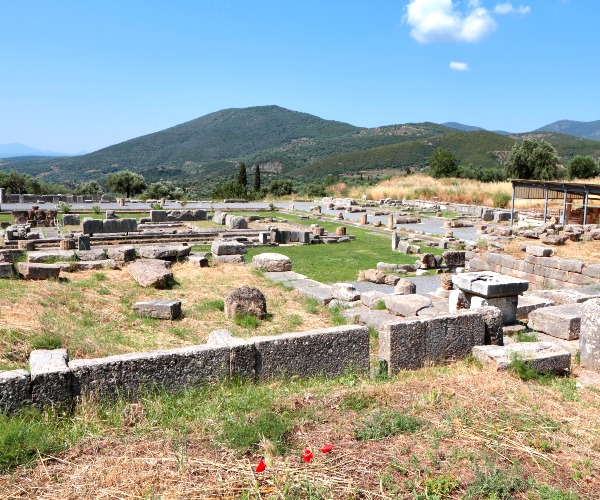
The Sanctuary of Asklepios at Epidaurus
The sanctuary of Asklepios, the god of medicine, lies in a small valley in the Peloponnese. Part of the Sanctuary of Epidaurus, it developed during the 6th century BC and is widely regarded as one of the purest masterpieces of Greek architecture, along with the Theatre and the Tholos. The entire vast site, which includes hospital buildings that were developed for healing gods, offers invaluable insight into the healing cults of both Roman and Greek times as well as the emergence of scientific medicine. It’s said that over 200 healing centers worked under the authorization of Asklepieion throughout the Eastern Mediterranean. Today they stand testament to the practice of medicine in antiquity while recognized as masterpieces of ancient Greek art.

The Palace of Knossos
Take a step back in time at the Palace of Knossos, the most important archaeological site in Greece. Home to the Minoan civilization, which was at its peak from 1700 to 1400 BC, it’s a massive complex that provides a fascinating look at life during ancient times. Not only are there massive columns and vibrant frescoes, but it even had a sewage system with water piped in and flush toilets, part of which remains today. It’s an immense site with courtyards, baths, private apartments, and more. Best explored on a Greece private tour with an expert guide who can provide insight that will bring it to life, you’ll learn about its fascinating history, ancient prehistoric rituals, culture, and art.
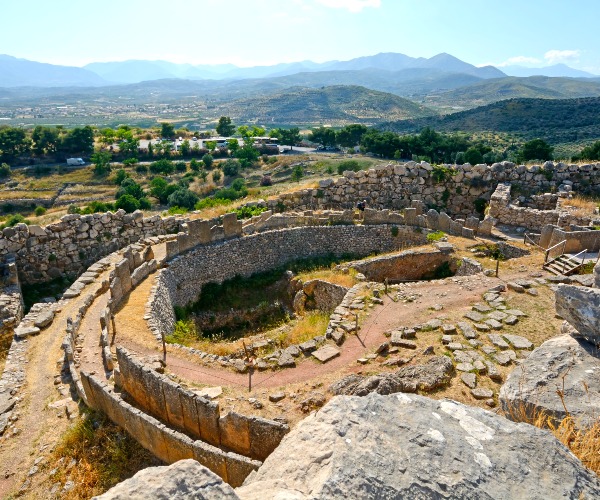
The Ancient City of Mycenae
Nestled in the northeastern Peloponnese, the ancient city of Mycenae served as the center of the Mycenaean civilization which dominated much of southern Greece around the second millennium BC as forerunners to the Athenians. Along with Tiryns, it played a key role in the development of classical Greek culture while unfalteringly linked to the Homeric epics, the Iliad and the Odyssey, which have influenced European literature and art for over three millennia. Highlights include the dramatic Lion Gate, the entrance to Agamemnon’s fortress, and Agamemon’s Palace with rooms at the north side believed to be royal private apartments. You can also see the “secret cistern,” a vaulted tunnel considered a masterpiece of engineering for the time, unique tombs, and more.
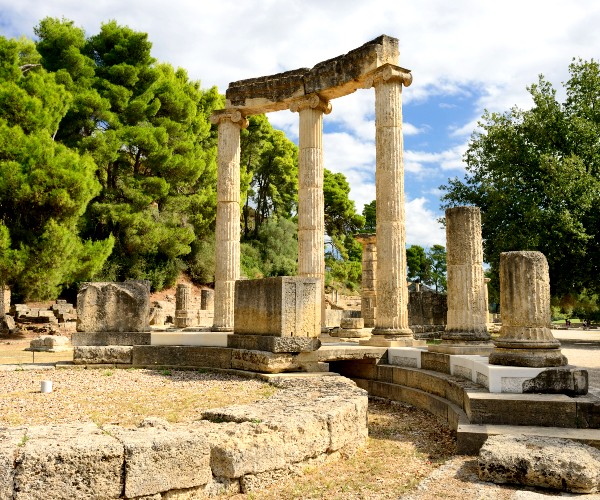
Archaeological Site of Olympia
Olympia is a UNESCO-listed archaeological site on the Peloponnese Peninsula. It was where the first Olympic Games were held in 776 BC to honor the god, Zeus, with the small town of Olympia nearby. The flame for today’s modern Olympic Games is still lit here today, using the reflection of the sunlight in a parabolic mirror. Due to multiple earthquakes and the calling for its destruction by Roman Emperor Theodosius, there aren’t a lot of ruins that are still visible, but steps, columns, and foundations can still be seen. After exploring the archaeological site where most of the ancient Olympic Games took place, ideally on a guided tour, visit the Olympia Archaeological Museum which displays numerous items from the archaeological site.
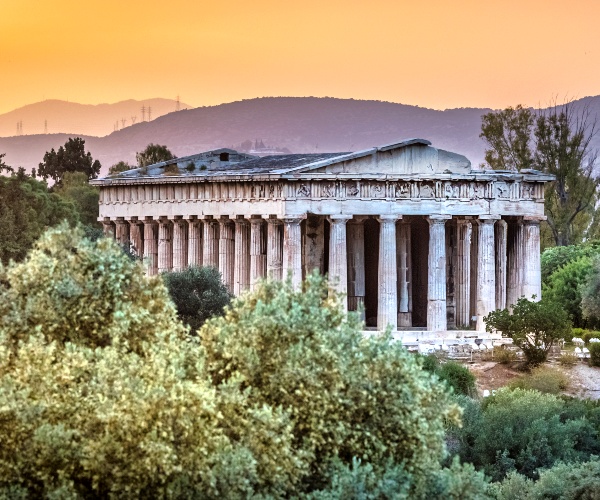
The Ancient Agora of Athens
Tucked just beneath the Acropolis in Athens, the Agora is a testament to the city’s status as the birthplace of Western civilization. It was first developed in the 6th century BC before being devastated by the Persians in 480 BC with a new one immediately built on the site. Today, it provides a lush respite from the hustle and bustle with greenery inhabited by lizards and various birds, the Temple of Hephaestus, a museum, and the 11th-century Byzantine Church of the Holy Apostles. It once served as the heart of public life, a popular trading place and meeting spot where the early Athenians came to discuss the nature of the universe, politics, and other current events, as well as to conduct business.
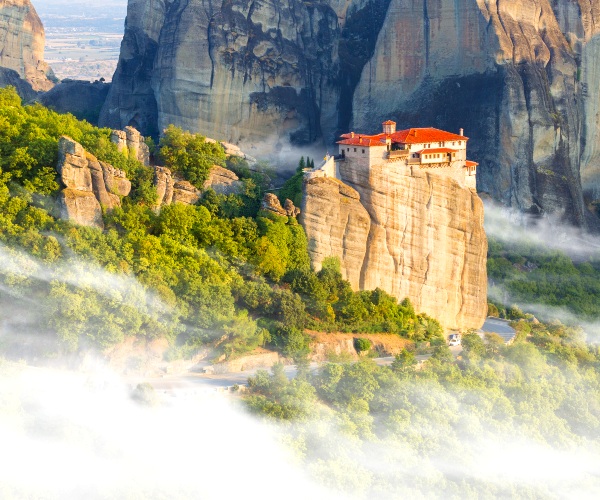
Meteora Monasteries
Set high atop dramatic rugged cliffs, Meteora is a vast Eastern Orthodox monastic complex with monasteries dating back to the 14th century, built by monks who sought freedom from religious persecution. One of the best historic sites in Greece, it overlooks the villages of Kastraki and Kalambaka, about four hours from Athens. In the past, there were hundreds of churches and monasteries but only six survive today and are open to the public for exploring. While easy to reach now, the monks had to access them by sitting in a basket hung on a rope or by climbing wooden ladders. The most popular monastery is the Monastery of Grand Meteron, while the Monastery of Holy Trinity is the most difficult to access.
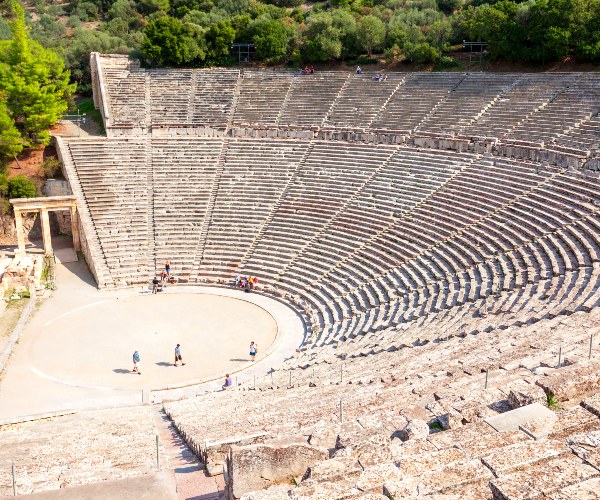
The Ancient Theatre of Epidaurus
The most well-preserved ancient theater in Greece when it comes to structure and perfect acoustics, the Ancient Theatre of Epidaurus is renowned for its unique architecture and harmonious proportions. Once holding up to 14,000 spectators, it was built in the late 4th century BC. The theater hosted everything from singing, music, and games that were included in the worship of Asclepius to a venue for healing patients, with the belief that observing dramatic shows had positive benefits for both physical and mental health. It originally had 34 rows of seats divided into 34 blocks by walkways and stairs. Surrounded by lush greenery, it adds to the aesthetics as part of the experience.

The Temple of Poseidon at Cape Sounion
An ideal day trip or tour from Athens, the Temple of Poseidon at Cape Sounion, located at the southernmost tip of Attica, is a sacred site. The temple stands upon a hill overlooking the brilliant blue waters of the Aegean, built out of local marble in 444 BC. Visitors can enjoy breathtaking views and numerous photo ops. If you look closely, you’ll even see carved graffiti from Lord Byron who is said to have been so impressed with the site that he carved his name on one of the columns (obviously not an act to follow today). If you join an excursion, many are timed to be here in time to catch the sunset, with the site providing an outstanding vantage point.
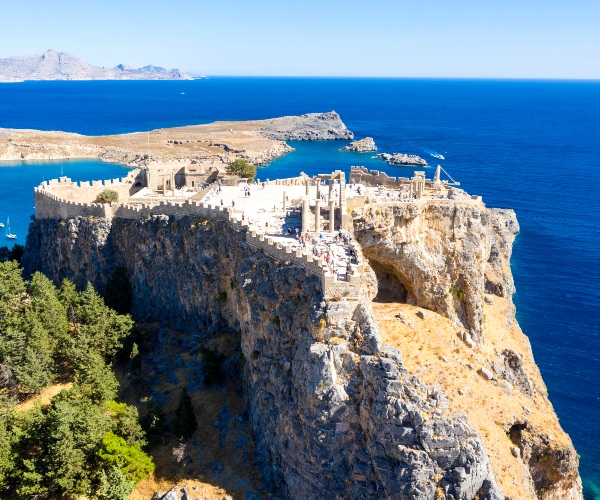
The Acropolis of Rhodes
The Acropolis of Rhodes is the site of the ancient Hellenistic city of Rhodes which ascends the slopes of Monte Smith just west of medieval Old Town Rhodes. Unlike most of the ancient acropolises around Greece, it wasn’t fortified but it was home to many huge temples, public buildings built on precipitous terraces, and sanctuaries. It’s considered one of the finest when it comes to Hellenic-style architecture that harmoniously blended in with the environment. Only a few of the ruins have been restored, such as the 2nd century BC tree-lined stadium, the theater once used for lectures by the Rhodes School of Rhetoric whose students included Julius Caesar, and the striking columns of the Temple of Pythian Apollo.
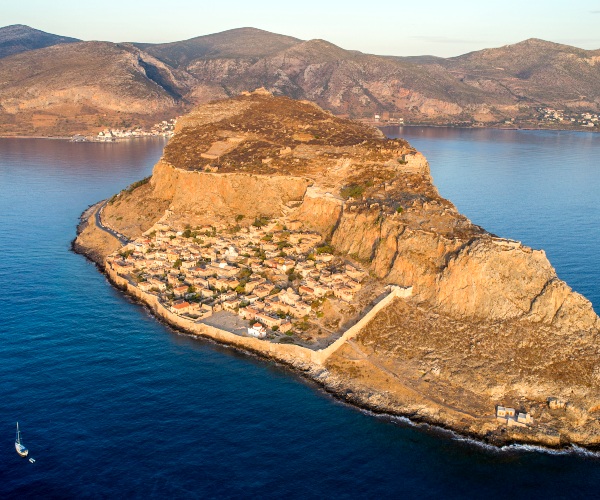
The Castle of Monemvasia
The Castle of Monemvasia sits on a tied island off the east coast of the Peloponnese, surrounded by the Myrtoan Sea. It’s actually a walled castle town that was carved out of a massive rock that rises from the water. The Old Town is part of the castle, called the “Gibraltar of the East” by the Venetians. Step through the gates to view a world of wonders as a living museum where you’ll see Venetian, Ottoman, and Byzantine influences throughout. A rocky path will bring you to the Fortress of Youlas to take in an awe-inspiring view over the city. The lower part hosts a 16th-century building home to the city’s archaeological museum along with Byzantine churches and historic ruins.
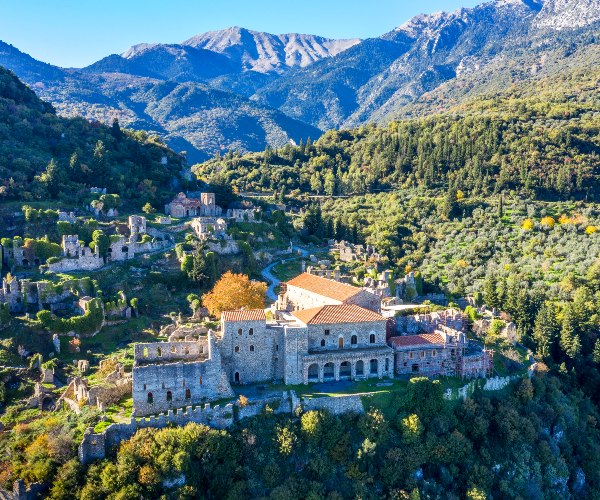
The Byzantine City of Mystras
The Byzantine City of Mystras is an archeological site at the classic fortified city of Mystras which sits on the steep slopes of Mount Taygetos. It was built in amphitheatrical style during the mid-13th century and was the second most important after only Constantinople during the later years of the Byzantine era. Today it offers a trip back in time before the majestic palace was abandoned. Surrounded by orange and olive trees, there is an imposing fortress at the highest point while seven medieval churches are connected by a descending series of arches and staircases. The Pantanassa Monastery is still occupied today, with the few nuns that remain in order to tend the garden and feed feral cats. Inside are rare frescoes.
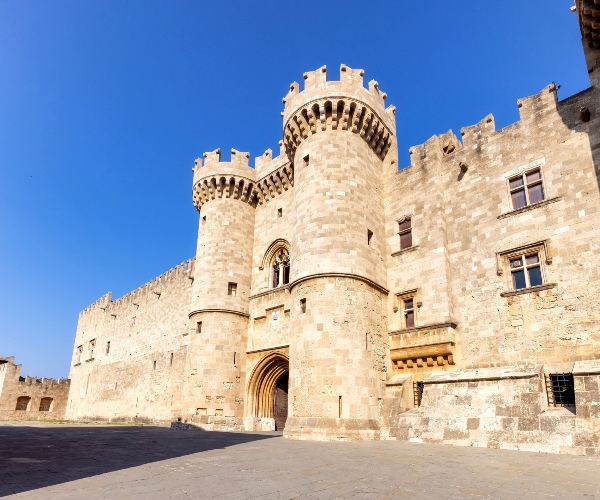
The Palace of the Grand Master of the Knights of Rhodes
Medieval Rhodes Town is home to some of the most well-preserved Venetian architecture in all of Europe which includes the castle-like Palace of the Grand Masters, complete with an arched gate and spherical towers. Today, it serves as a history museum. But before stepping inside, you might want to take a stroll along the roughly 2.5-mile-long old city walls that start right here. Next, explore the more than 150 rooms that are open to the public at the palace itself, with opulent features like antiques and pebble mosaic floors. Highlights include the Grand Reception Hall, the elegant Music Room, the Waiting Room, and an impressive ballroom. There are also notable frescoes by well-known artists like F. Vellan and P. Gaudenzi.
Read More
Best Places to Visit in the PeloponneseReady to plan your trip?
Whatever you want from your dream trip, our team ofexperts are ready to help.

COPYRIGHT © 2026 UNFORGETTABLE GREECE. ALL RIGHTS RESERVED