


Top Things to See & Do in Crete
Located in the southern region of Greece, bordered by the Aegean Sea to the north and the Libyan Sea to the south, Crete is a massive island covering more than 3,200 square miles at 160 miles long and up to 37 miles wide. It’s possible to explore some of its beaches, caves, mountainous terrain, historical landmarks, and top-notch cuisine in a few days but you’ll need at least a week to experience it more in-depth. To help you narrow down your itinerary, we’ve provided a short list of the top things to see and do in Crete, ensuring an unforgettable escape.

Crete Overview
Crete is the country’s largest island, with a diverse range of landscapes that include everything from rugged mountains, canyons, and caves to pink sandy beaches lapped by translucent turquoise waters. There are luxury resorts where you can relax and soak up the sand, but those who want to delve into the island’s history can enjoy a wide range of options. Explore ancient ruins like Knossos Palace, a Minoan settlement and the oldest city in Europe dating between 1700 and 1400 BC. There are world-class museums like the Heraklion Archaeological Museum displaying many artifacts from Knossos Palace, covering 5,000 years of history. With many restaurants serving sea- and farm-to-table dishes, you’ll have plenty of delicious eats to fuel all your exploits.

Best Time to Visit Crete
Thanks to its mild Mediterranean climate, Crete is a year-round destination. The tourist season officially runs from mid-April through mid-October, peaking in July and August. The summer months are especially popular for enjoying the island’s beautiful beaches, with hot temperatures averaging around 30 Celsius, although heat waves are known to strike with the mercury rising to over 38 degrees. There’s very little if any rain, ideal for swimming and various watersports. But this is also when you’ll encounter the thickest crowds and pay the highest prices. For pleasant weather and a more serene atmosphere, consider the earlier or later part of the tourist season. Mid-May through early June and mid-September through about mid-October are two of the best times to visit Crete.
How to Get to Crete
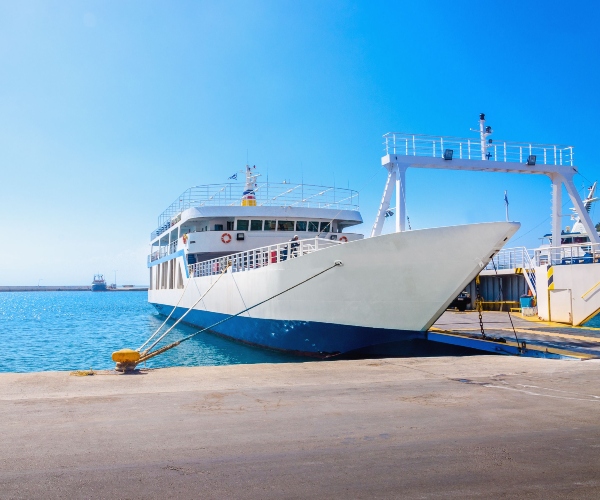
There are many options for getting to Crete. If you want to save time, you can fly. There are two major international airports, including one in Chania, Daskalogiannis Airport Chania (CHQ) located in the northwest and Nikos Kazantzakis Airport Heraklion (HER) in the north-central region. Many arrive by ferry with six different ports here: Heraklion, Chania, Agios Nikolaos, Rethymnon, Kastelli-Kissamos, and Sitia. Traveling by ferry is generally more comfortable as you can stand out on the deck enjoying the fresh salty sea air and a view of the Mediterranean. Standard ferries take 8.5 to 13.5 hours to reach Crete from Athens, but the high-speed ferry can bring you to Chania in five hours.

Top Things to See & Do
Whether you’re a nature lover, a history buff, a foodie, or an outdoor adventurer, on this list of top things to do in Crete on your Greek vacation, you’re sure to find plenty that entices. As the island is so large, you might want to choose two or three bases, depending on the amount of time you have. Chania, Heraklion, Rethymnon, and Agios Nikolaos are just a few of the good options. But no matter where you land, you’re likely to be within easy reach of a gorgeous beach for soaking up the sun, and at least a few of the top things to see in Crete.
Wander Through Chania Old Town
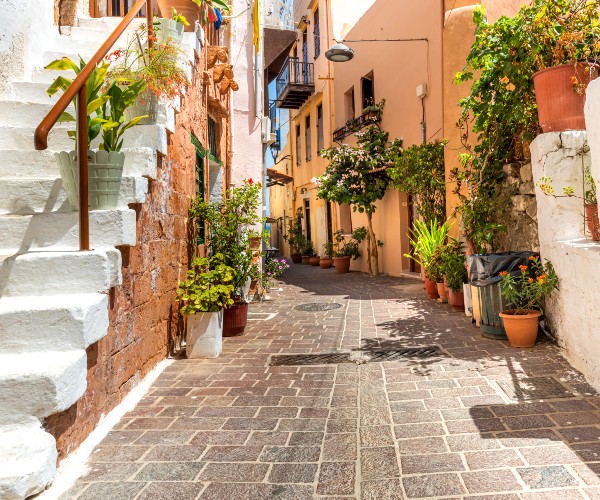
Old Town Chania is one of Crete’s most romantic towns. It has an intriguing history that dates back more than 5,000 years, built on the ruins of ancient Kydonia along the northwest coast. The name Chania came into use around the early 13th century when it was occupied by the Venetians who fortified the town around its fortress while restoring the city. You’ll see Venetian influences throughout with many of the elegant homes and buildings constructed in Venetian style. Stroll the narrow streets and around the beautiful harbor to soak up the enchanting atmosphere. Highlights include the Venetian harbor itself and the early 17th-century Firka Castle where you can climb to the top for a panoramic view and explore the maritime museum.

Visit The Palace of Knossos
Europe’s oldest city, the Palace of Knossos was the center of life on the island during the Bronze Age, home to the ancient Minoans, the world’s first organized civilization. The main palace was the largest and oldest of all the palatial Minoan structures with many floors and exceptional frescoes. While the original layout can no longer be discerned due to the many modifications that followed, at its peak there were some 1,300 rooms connected by corridors. At the entrance, you’ll see a procession fresco and the imposing propylaeum with dual bull horns that was an important symbol in Minoan religion. The terracotta pipes that were used to distribute the water supply and sanitation drainage can still be seen today.

Explore Rethymnon Old Town
Tucked just beneath the Acropolis in Athens, the Agora is a testament to the city’s status as the birthplace of Western civilization. It was first developed in the 6th century BC before being devastated by the Persians in 480 BC with a new one immediately built on the site. Today, it provides a lush respite from the hustle and bustle with greenery inhabited by lizards and various birds, the Temple of Hephaestus, a museum, and the 11th-century Byzantine Church of the Holy Apostles. It once served as the heart of public life, a popular trading place and meeting spot where the early Athenians came to discuss the nature of the universe, politics, and other current events, as well as to conduct business.
Discover the Monastery of Arkadi
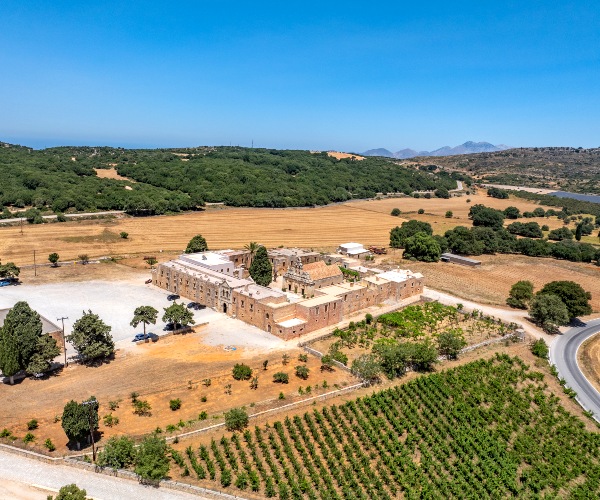
Located near Rethymnon on the slopes of Mount Psiloritis, the Monastery of Arkadi is a fine example of Renaissance architecture from the island’s time under Venetian rule. It also reveals stories of extraordinary sacrifice when battling against Ottoman invaders. While it dates back centuries earlier, likely around the 11th century, the current fortress-like structure was completed in the 16th century. There are still monks continuing their work here and living in the cells. It served as a center of learning and housed a gold-embroidery workshop during the 16th and 17th centuries. The vestments and fabrics made here were sold to monasteries and vestments across the globe. The public is welcome to visit and can even stay overnight in one of the cells.
Hike the Samaria Gorge
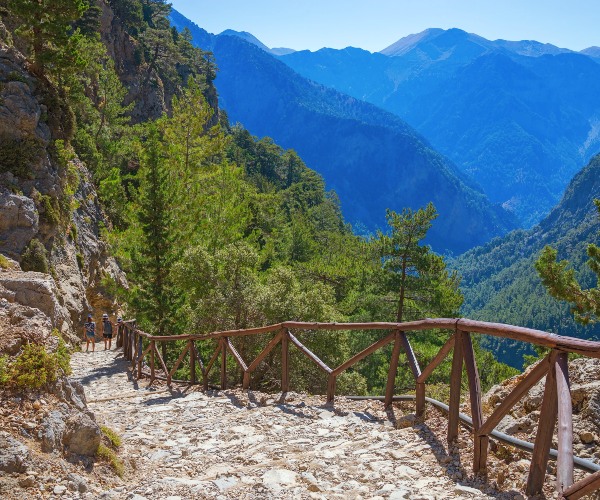
Samaria National Park in the White Mountains is one of the most popular places to immerse yourself in nature, and it’s home to Crete’s top hike, the Samaria Gorge. The park’s crown jewel, it is the longest canyon in Europe, stretching 11 miles through the spectacular, rugged landscape. Framed by high mountains, in addition to the picturesque scenery, the gorge is home to more than 450 plant and animal species. Keep watch for unique wildlife like Crete’s native goat, the rare and endangered kri-kri, along with the Cretan badger and the spiny mouse. The path starts from Xyloskalo near Omalos and concludes in the village of Agia Roumeli which touches the Libyan Sea. It’s possible to return by bus or boat.
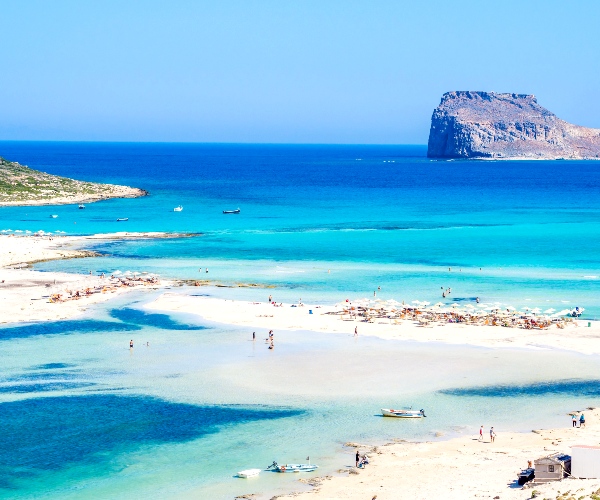
Swim in Balos Lagoon
Balos Beach is one of the most beautiful beaches on the island, famous for its turquoise lagoon and beautiful surrounding scenery. A must-visit for anyone who travels to Crete, it’s located about 11 miles northwest of Kissamos on the west side of the Gramvoussa Cape and has long been one of the island’s most photographed spots. It can be reached via boat tour from Kissamos, you can drive here on your own, or access it on a Greece private tour with someone else doing the driving. If you’re here during the peak tourist season, plan to arrive just before sunrise before the boats and the big crowds. After you reach the parking area, be prepared for a rugged, moderately challenging .85-mile hike.
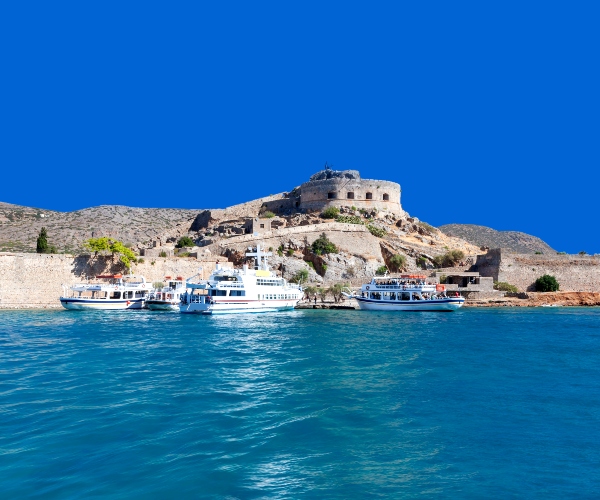
Take a Boat to Spinalonga Island
A boat tour to Spinalonga Island reveals yet another example of Crete’s incredibly diverse history. Another one of its most popular attractions, the tiny island lies off the southern coast in the Lassithi region. Looking at the island from the coast, you can see the remains of its 16th-century Venetian fortress that was built to protect the Bay of Mirabella. But once you arrive, the ruins of a leper colony, a settlement here between 1903 and 1957 with homes and buildings, can be explored. A just under mile-long path that traverses the perimeter of the island is accessed after passing through Dante’s Gate, a tunnel that served as the entrance to the leper colony. Many tours include lunch and time to swim.

Explore Agios Nikolaos
Agios Nikolaos is a popular base for exploring the famous Elounda which is a departure point for boat tours to Spinalonga and offers a wealth of beautiful beaches. Authentic villages, cultural attractions, and nature trails are all within easy reach. The town itself is fun to wander with narrow streets to stroll and soak up the charming atmosphere. Lake Voulismeni sits at its center as the focal point, reputed to have been the bathing place of goddesses Artemis and Athena. Hike the footpath up Agios Charalambos Hill and you can take in a magnificent view of the town from above. You’ll also find museums to explore like the Archaeological Museum covering the region’s history from Neolithic and Minoan times to the Roman era and beyond.
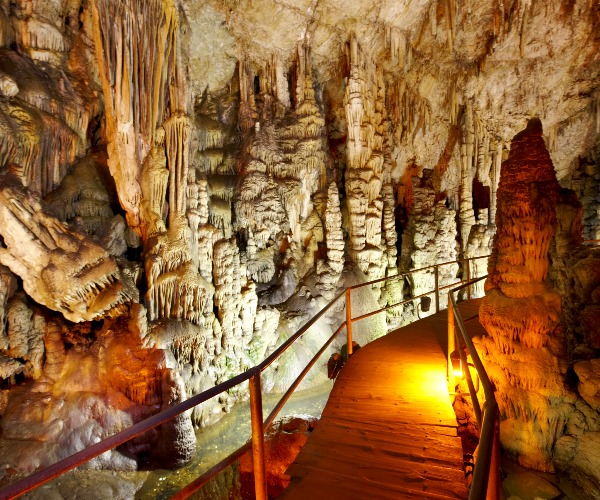
Discover the Cave of Zeus
The mythological Cave of Zeus, also called Diktaion Andron, is located in eastern Crete. It’s said to be the birthplace of the god Zeus and a place of worship during ancient times. There have been many artifacts uncovered here, including knife blades, axes, various objects in bronze, stone and ceramic lamps, and clay human figurines. Today, most come to explore its vast chambers with stalagmites and stalactites on a guided tour. Accessing the cave requires a steep but manageable 35- to 40-minute hike with picturesque views enjoyed along the way. While you can reach it on your own, there are multiple tours available that will bring you here with other attractions explored too, like the Palace of Knossos and the Lassithi Plateau.
Read More
Best Historic Sites to Visit in Greece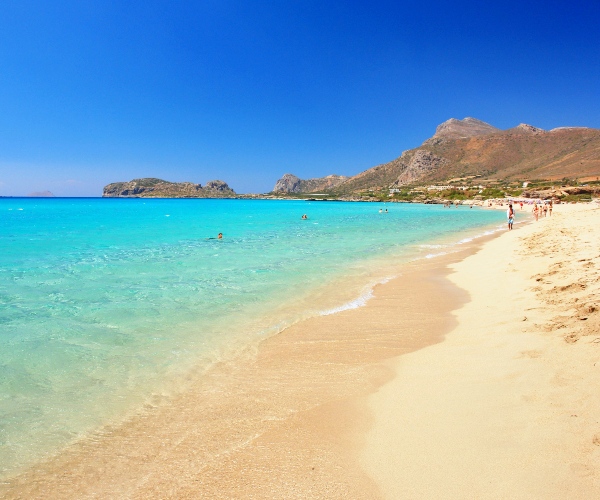
Relax on Falassarna Beach
Spectacular Falassarna Beach can be easily combined with a visit to Balos Lagoon. Multiple outfitters offer tours that include both, or you can make the 20-minute drive from Kissamos on your own. It’s the easiest to reach of the two, with no hike required. Falassarna is actually made up of five consecutive beaches with the main beach known as Pachia Ammos, stretching for about two-thirds of a mile. While it attracts the most visitors, as there’s so much room, it rarely feels too crowded. There are umbrellas, facilities for watersports, and several cafes and snack bars making it enjoyable to spend the whole day. Plus, at the northern end of the beach, you’ll even find the ancient ruins of Phalassarna, a Greco-Roman city.
Visit the Villages of Lasithi Plateau
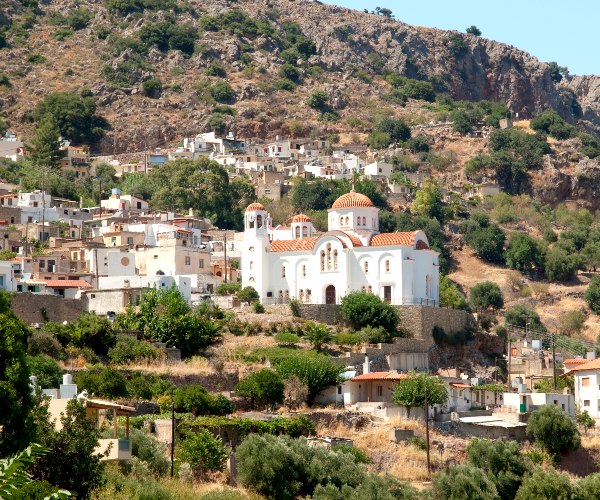
The Lasithi Plateau is known for its tranquil villages where locals enjoy a more traditional way of life. You’ll find shops with locally crafted items, family-run tavernas, and welcoming residents. Along the coast, there are secluded beaches, and, in the mountains, scenic hiking paths. Zakros is known for its Minoan Palace, one of the four main administrative centers of Minoan Crete. It has a pretty natural harbor, a beach for swimming, and two museums, the Museum of Natural History and the Museum of Water and Hydraulics. Lastros is a typical Cretan mountain village with narrow streets and alleyways lined with whitewashed homes, flower-filled courtyards, a historic Byzantine church, and traditional cafes and tavernas serving Cretan delicacies.

Dine on Traditional Cretan Cuisine & Wine
Speaking of Cretan cuisine, you won’t want to miss the opportunity to try the traditional fare. Crete is renowned for its foodie scene thanks to numerous microclimates and fertile soil that allows fruits and vegetables to flourish. Of course, as an island surrounded by the sea, fresh-caught fish and seafood are common. You might even take a cooking class where you’ll help prepare traditional dishes using local herbs, olive oil, vegetables, and other local products. Cretan cheese pies are often included along with the chance to make fresh-baked bread. There are also food and wine tours featuring tastings of some of the island’s best. Crete has a wine tradition dating back 4,000 years, renowned for light whites and aromatic reds.
Read More
Greek Island GuideReady to plan your trip?
Whatever you want from your dream trip, our team ofexperts are ready to help.

COPYRIGHT © 2026 UNFORGETTABLE GREECE. ALL RIGHTS RESERVED