


Best National Parks in Greece
There are 15 national parks and two marine national parks in Greece. In 1938, Mount Olympus became the country’s first national park, designed to help protect its unique plant and animal life. Greek Law states that the core of its national parks (not including the marine parks) must be at least 5.8 square miles with the surrounding area equal to or larger than the core size. While facilities tend to be limited, the scenery and opportunities for outdoor adventures more than make up for that. From spectacular hiking in parks like Mount Olympus and Samaria Gorge to kayaking in Vikos – Aoös, and snorkeling in the National Marine Park of Alonissos, the best national parks in Greece offer something for everyone.
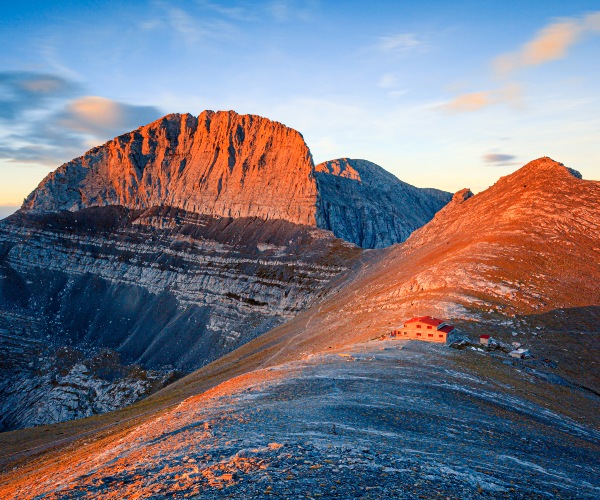
Mount Olympus National Park
Mount Olympus National Park is steeped in history and mythology, as the legendary home of the Greek gods. Rising to nearly 9,600 feet in height, Mount Olympus is the star attraction. The tallest mountain in Greece, it attracts hikers from far and wide to reach the summit, a 6-mile trek one way. It takes about seven hours to reach the top and four hours back so most do it in two days with a network of huts available for an overnight stay, accommodating up to a dozen hikers. There are also routes leading to two lower peaks along with other trails doable for day hikes. Over 1,700 plant species, more than 100 bird species, and animals like deer, jackals, and wolves can be seen too.
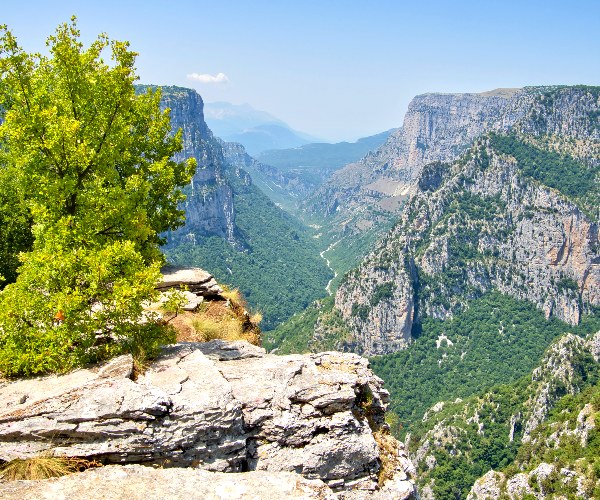
Vikos-Aoos National Park
Located in the northwest corner of the country, Vikos-Aoos National Park was named after the two gorges located within its borders. There are also caves, lakes, rivers, and mountains, with the highest peak Mount Tymfi, providing panoramic views of lush forests. Outdoor activities abound, with everything from hiking, climbing, and mountain biking to kayaking and wildlife watching, including brown bears, deer, chamois, lynx, wild cats, otters, and wolves. There are more than 120 bird species, including 15 types of raptors. Vikos Gorge is the most popular attraction, stretching for over six miles with a depth of up to 1,607.6 feet, making it the world’s deepest relative to width according to the Guinness Book of World Records.

Samaria Gorge National Park
Tucked into the White Mountains of Crete, Samaria Gorge National Park was established to protect the endangered kri-kri, a species of wild goat unique to the island. But most visit for its namesake, Europe’s longest canyon, Samaria Gorge. Many come to make the 11-mile trek through the rugged canyon, framed by steep cliffs and home to 450 plant and animal species. In addition to the kri-kri, watch for Cretan badger, Cretan wildcat, and golden eagle. Visiting the sea caves on the park’s south coast brings the chance to spot Mediterranean monk seals. Regular buses depart from Chania to Xyloskalo, the head of the gorge. The trail ends in the seaside village of Agia Roumeli, with buses and boats available for the return.
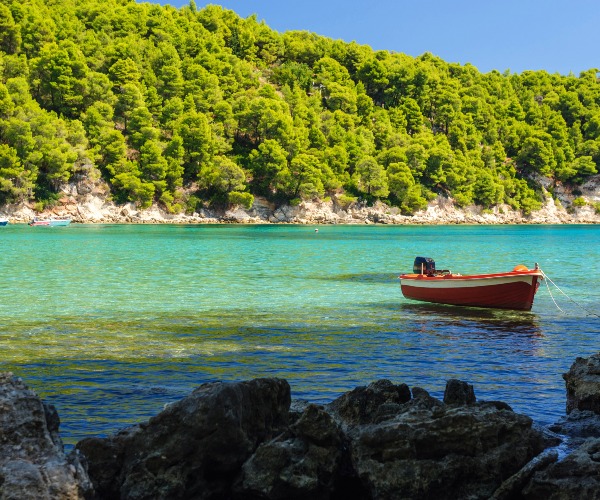
National Marine Park of Alonissos
The largest marine park in Europe, covering over 872 square miles (2260 square kilometers), the National Marine Park of Alonissos was primarily created to protect rare seabirds and the endangered Mediterranean monk seal. In the summer, boats from Skopelos and Alonnisos, the only inhabited island, provide full-day tours through the park. While the elusive monk seal is rarely spotted, more common sightings include three species of dolphins, sea turtles, migrating whales, and Eleonora’s falcons. While boats aren’t allowed to get closer than 400 meters to most islets, the island of Kyra Panagia is an exception. It’s home to a magnificently restored monastery that dates to 1200 AD. Divers can explore an underwater museum off the coast of Peristera.
Did you know?
The Mediterranean monk seal is one of the world’s most endangered marine mammals. There are only about 600-700 individuals left in the wild, primarily found in the waters around Greece, Turkey, and the western Sahara coast.
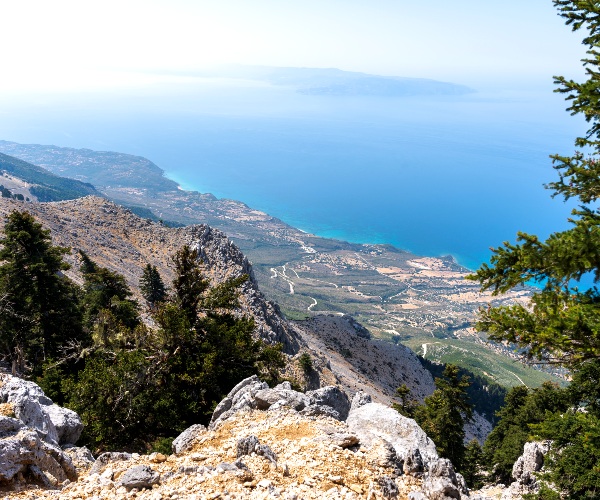
Ainos National Park
Located on the island of Kefalonia in the Ionian archipelago, Ainos National Park is home to Mount Ainos, the island’s tallest at 5,341 feet, covered with forest, including Greek fir and black pine trees, making it ideal for a scenic hike. On a clear day from the top, a panoramic view of the islands of Ithaca, Lefkada, and Zakynthos can be seen, along with the northwest region of the Peloponnese. It can be reached by taking the 4-mile-long Digaleto trail near the community of Digaleto. There are several trails winding throughout the park that lead to secluded lakes and hidden caves. However, the star attraction is the semi-wild horses, which can typically be spotted on the southeast side of the mountain.
National Marine Park of Zakynthos
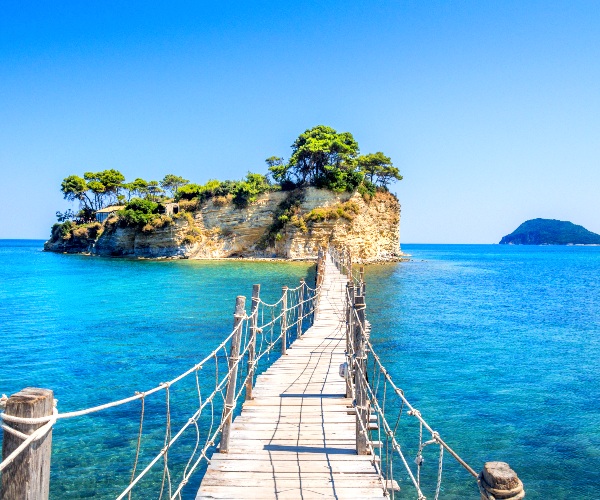
The National Marine Park of Zakynthos was established to protect two endangered species, the loggerhead sea turtle and the Mediterranean monk seal. Both have protected breeding grounds here, while geckoes, birds, and butterflies abound. It’s believed that 80 percent of the loggerhead turtle population in the Mediterranean is born on the beaches here. The park is made up of a vast stretch of beach and ocean covering 52 square miles, including the wetland of Keri Lake, the Bay of Laganas, and two small islands. Visitors can follow the trails carefully to avoid disturbing the natural habitats of the turtles, as well as explore the waters. The only way to visit the park, however, is to rent a boat or book a tour.

Sounio National Park
Located at the southern tip of the Attica Peninsula roughly 30 miles from Athens, Sounio National Park is a popular day trip from the capital city, with numerous outfitters offering tours. The star attraction is the Temple of Poseidon standing atop a hill at Cape Sounion overlooking the Aegean Sea, built from local marble in 444 BC. It played an important role in Greek history, marked with legends that include being recorded in Homer’s Odyssey. Look closely and you’ll see Lord Byron’s carved graffiti on one of the columns. Soak up the spectacular views and take advantage of the outstanding photo-ops. If you have time, you might also relax on the beach, enjoy a refreshing swim, or explore the caves nearby.
Parnitha National Park
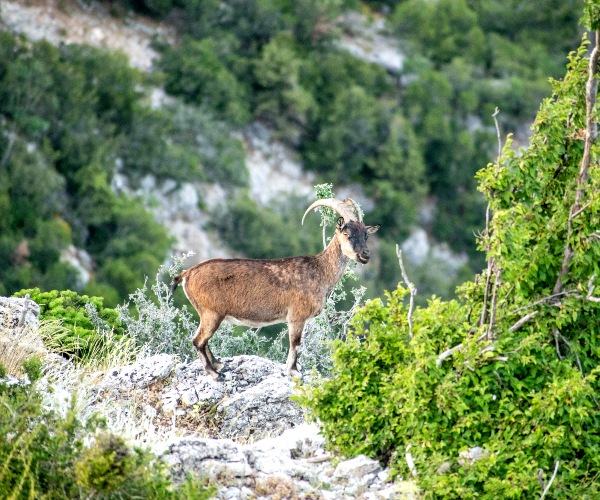
Parnitha is only about an hour’s drive north of Athens, providing an ideal escape from the hustle and bustle, home to a mountain of the same name, caves, gorges, and lakes. It’s popular for hiking, climbing, canyoning, mountain biking, and birdwatching, with diverse wildlife to watch for, including a large population of red deer. The flora is impressive too, with everything from fir and pine trees to wild tulips. Visitors can also explore sites like Tatoi Palace, the 10,000-acre estate and 19th-century summer palace of the former Greek family on Mount Parnitha’s southeast slope. One could easily get lost for hours in this sprawling complex. There are several fortress ruins to explore and a cable car runs to Mont Parnes Regency Casino.
Pindos National Park
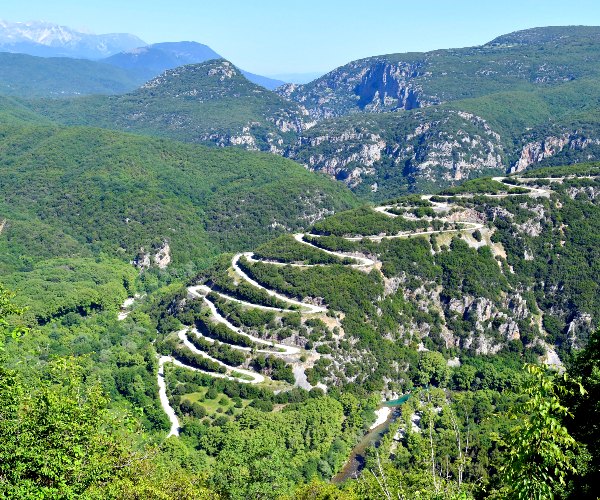
Located in one of the least visited parts of the country in the western part of mainland Greece, Pindos National Park is accessed from the small village of Perivoli. Home to the Pindos Mountains, the largest mountain range in Greece with its second-highest peak, it covers about 27 square miles. There are lush forests, grasslands, canyons, lakes, rivers, abundant wildlife, and scenic trails. One of the most striking features of the park is its dense forests, dominated by Fagus sylvatica trees and Pinus nigra. These soaring giants provide a green canopy that adds to the enchanting beauty while providing a haven for many animals, including a small population of Eurasian bears, otters, lynx, wildcats, and more than 80 bird species.
Ready to plan your trip?
Whatever you want from your dream trip, our team ofexperts are ready to help.

COPYRIGHT © 2026 UNFORGETTABLE GREECE. ALL RIGHTS RESERVED